


as a grown-up
 1 / 72 / 7
pick a school
3 / 7before you paddle
4 / 7vs Singapore
5 / 7by the water
6 / 7The Short Version
- A first group lesson on the Gold Coast is two hours long, with the instructor in the water beside you and soft boards in waist-deep water.
- The City of Gold Coast encourages beginners to learn with a licensed surf school and to use soft-top boards.
- Book three lessons rather than one. Two of the schools below sell packs of 3 or 5 lessons, and a few mornings in a row teach far more than a single go.
The Gold Coast has been selling itself on surf for over a century. By 1917, the southern coastal strip of Queensland was already being called a "surfer's paradise", and in 1933 the township of Elston was officially renamed Surfers Paradise.
Plenty of the people in the water learned as children. You can still start as an adult, and a few days of lessons on a beginner beach will get you riding whitewash on your own. Here is how to pick a school, what a lesson involves, and how to stay safe once you are on your own.
Learning to Surf on the Gold Coast at a Glance
| Detail | What to expect |
|---|---|
| Lesson length | 2 hours for a beginner group lesson |
| Where | The Spit, Surfers Paradise, Burleigh and Greenmount, depending on the school |
| Price (one group lesson) | From $60 to $70, as listed on 19 November 2026 |
| Board | Soft-top, supplied |
| What to bring | Swimmers, a towel, flip-flops and a bottle of water |
| Getting there from Singapore | Fly to Brisbane and take the train south |
Source: City of Gold Coast and each school's own site, checked 19 November 2026. Prices are in Australian dollars, as listed by each school on that date. Full list at the end.
Why Take a Lesson
The City of Gold Coast's own advice for beginners is to learn with a licensed surf school, start on the whitewash and small unbroken waves, and ride a soft-top board, which it says is good for buoyancy, stability and safety.
The council employs the largest professional lifeguard service in Australia. It covers 54 kilometres of beaches, and 28 of them are patrolled all year round.
Three Schools, Three Beaches
Get Wet Surf School, The Spit
Get Wet has been licensed to teach at The Spit since 2005. The beach is an 8-minute drive from Surfers Paradise, and the school says the waves there roll softly to the shore in waist-deep water. Adult group lessons run at a maximum of five students to one instructor, and the instructor is in the water with you the entire time. A 2-hour introduction was listed from $70 per person, and there is a discount for 3 or 5 lessons. The school guarantees you will stand at least once in your first lesson, or the next one is free.
Cheyne Horan School of Surf, Surfers Paradise and Burleigh
Cheyne Horan teaches at Surfers Paradise and Burleigh, with a beginner lesson and an intermediate lesson each day. Your first lesson stays in waist-deep water with easy-to-ride waves and soft boards. At Surfers Paradise, one lesson was listed at A$60, three at A$170 and five at A$280.
Walkin' On Water, Greenmount Beach
Walkin' On Water teaches at Greenmount Beach, and runs ladies-only lessons as well as group and private ones. Its instructors hold at least a Surfing Australia or ISA Level 1 instructor qualification, and the school says most of its surfers stand up on their first wave.
Staying Safe Once the Lesson Ends
The council's rules are short, and they are worth learning before you hire a board on your own.
- Swim between the flags: swim at a patrolled beach, between the red and yellow flags. No flags means no swim.
- Surf outside them: no surfing between the red and yellow flags, and no fibreglass or hard plastic boards there either.
- Watch first: watch conditions for 10 minutes and see how experienced surfers paddle out.
- If a rip takes you: stay calm, raise one arm straight up, float and wait for help. Don't swim against it.
- When unsure: if in doubt, don't paddle out.
Our Take: Pick Your Month by the Water, Not the Air
| July averages | Gold Coast | Singapore |
|---|---|---|
| Daily high | 21.3°C | 31.4°C |
| Daily low | 12.0°C | 25.4°C |
The sea at Surfers Paradise averages 21.5°C in July and August and 27.1°C in February. On land, a July day at the Gold Coast Seaway averages a high of 21.3°C and a low of 12.0°C. Singapore's July averages are a high of 31.4°C and a low of 25.4°C.
Our take: if you train in Singapore, a winter lesson on the Gold Coast may well be the coldest session of your year, and two hours in 21°C water feels very different from a swim at home. Ask the school for a wetsuit when you book. If you would rather surf in water closer to what you know, go in the southern summer: February is the warmest month in the sea.
Getting There From Singapore
There is no direct flight from Singapore to the Gold Coast, so most people land in Brisbane, and most Airtrain services from the airport continue as Gold Coast line trains. Our guide to getting to Queensland from Singapore compares the three airports.
The Open Itinerary: A Learn-to-Surf Week
This is a plan you are allowed to ignore. It assumes you land in Brisbane and stay near the beach for five days.
| Day | The plan | Skip it if… | If you want more… |
|---|---|---|---|
| 1 | Fly into Brisbane, take the train south and settle in. | You land late. Save the beach for the morning. | Walk the beach at sunset and watch where the surfers sit. |
| 2 | First 2-hour lesson in the morning. | The swell is big. Schools move or cancel, so trust them. | A swim between the flags in the afternoon. |
| 3 | Second lesson. Rest your shoulders in the afternoon. | Your arms are done. Take a rest day instead. | Book a private lesson to fix one thing. |
| 4 | Third lesson, then watch conditions for 10 minutes before every session from here on. | You would rather try a different beach. Book with another school. | Ask your instructor which beach suits you on your own. |
| 5 | A last early surf, then the train back to Brisbane. | Your flight is early. Finish on day 4. | Stay on and add a day trip inland. |
Inland from the beach: the rainforest at Lamington and Springbrook.
Plan It With ATHLO+
The plan above is yours to use as it is. ATHLO+ Travel is on the way, with creator-hosted trips and one-to-one itinerary planning, starting in Queensland, and the SportPlus | ATHLO+ community on Telegram hears about it first.
Ready to plan the trip? Join the ATHLO+ Telegram community and ask who else is flying out.
Sources
- City of Gold Coast, Surfing, Beach safety and Lifeguards, checked 19 November 2026.
- Get Wet Surf School, Beginner Surf Lessons, Locations and home page.
- Cheyne Horan School of Surf, Beginner Surfing Lesson at Surfers Paradise and home page.
- Walkin' On Water Surf School, home page.
- Wikipedia, Gold Coast Airport and Airtrain (Brisbane).
- Wikipedia, Gold Coast, Queensland (climate table, Gold Coast Seaway 1992 to 2020; sea temperature) and Singapore climate data (1991 to 2020 normals).
- Cover photo: Kgbo, via Wikimedia Commons, CC BY-SA 4.0.

More from ATHLO+ Travel
 Gold Coast
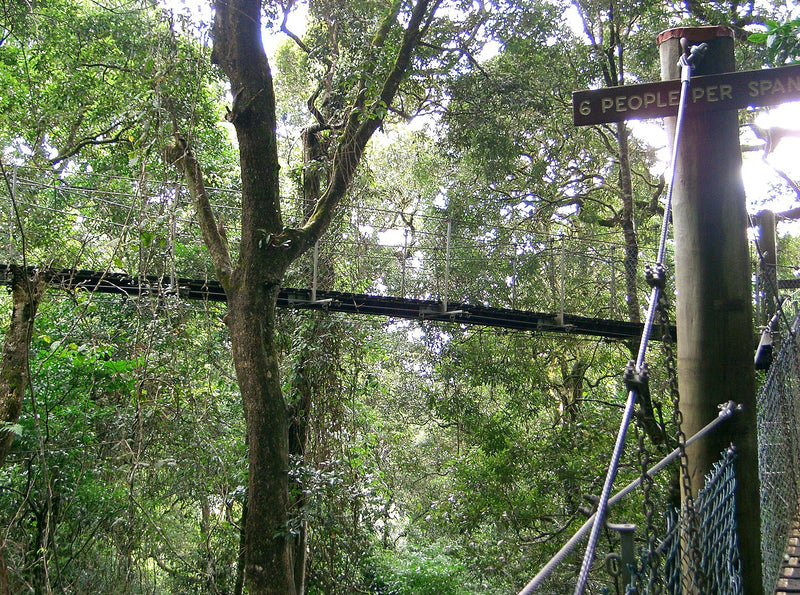
Lamington and Springbrook: The Rainforest Above the Gold CoastO'Reilly's Tree Top Walk, Elabana Falls, Purling Brook Falls and the Natural Bridge glowworms, up where it runs...Read →
 Gold Coast
 Without a Race Bib: A Coastal ResetFor the people who come with the runners at the Gold Coast Marathon (3 to 4 July 2027),...Read →
 Kayaking
The Noosa Everglades: Paddling One of the World's Two EvergladesTourism Noosa calls it one of only two everglades systems on Earth. Kayak and cruise trips, camping permits,...Read →