

Compression Socks for Running: How They Work, When to Wear Them and Where to Buy in Singapore
Shop the gear in this story
socks work?
 1 / 8
make you faster
2 / 8is tight
3 / 8off before bed
4 / 8losing the stretch
5 / 8if you have
6 / 8mid or long


 7 / 8
The Short Version
- Compression socks squeeze hardest at the ankle and less further up, helping blood flow back towards your heart.
- They probably will not make you faster. Reviews in 2025 found no performance benefit over regular socks.
- They may ease soreness a day or two after a hard session for some people, though the evidence is weak. Wash them often, dry them out of the sun, and skip them in bed.
Look around any start line in Singapore and you will spot them: knee-high socks in loud colours, pulled tight over the calves. Some runners will not do a long run without them; others think they are a fashion statement. Which camp is right depends on what you expect the socks to do.
Here is what you need to know about compression socks for running: how they work, what the research says, how long to wear them, whether you can sleep in them, how to wash them, and where to buy them in Singapore.
Compression Socks at a Glance
| Question | Short answer |
|---|---|
| How do they work? | Graduated pressure, tightest at the ankle, helps blood flow back towards the heart |
| Will they make me faster? | Probably not; the evidence on performance is mixed |
| Do they help recovery? | Possibly a little with soreness, for some people; certainty is very low |
| When to wear them? | Put them on before you run; take them off before bed |
| How to wash them? | Daily, by the care label, dried naturally out of the sun |
How Compression Socks Actually Work
Most compression socks are graduated. They are tightest around the ankle and get looser the higher up the leg they go. That squeeze raises the pressure in the tissue under your skin and reduces fluid build-up, which helps blood flow back towards your heart instead of pooling in your lower legs.
The most common medical use is treating chronic venous insufficiency, where the valves in the leg veins do not work as well as they should. The socks also reduce leg swelling in people who are on their feet all day or sitting for hours, such as on a long flight.
Ask why it would help a runner, though, and the answers get vaguer. The Human Performance Resource Center (HPRC) admits that the exact way compression garments work is still a bit of a mystery. Researchers believe the squeeze limits swelling and improves blood flow to clear the waste left by the normal muscle damage of exercise.
Reading the Label: What mmHg Means
Compression is measured in millimetres of mercury (mmHg). Cleveland Clinic lists the common levels like this:
- Mild: 8–15 mmHg.
- Moderate: 15–20 mmHg.
- Firm: 20–30 mmHg.
- Extra-Firm: 30–40 mmHg. This is medical-grade compression, usually available only on prescription and meant to be used under a doctor's supervision.
If you want compression for a medical reason, such as swelling or varicose veins, get measured and ask your doctor which pressure level you need.
Do Compression Socks Make You Run Faster?
Probably not. HPRC describes the evidence on performance as mixed and says the most reliable way to find out is to try a pair yourself.
The newer research is no kinder. A 2026 review in Frontiers in Physiology summed it up: a 2025 meta-analysis found no evidence that compression garments worn while running improve race time or time to exhaustion, and a 2025 review of compression socks found they did not beat regular socks on physiological, performance or perceived-effort measures.
The Recovery Case: Small, but Real for Some
Recovery is where compression has more going for it. According to HPRC, wearing compression during or after exercise has been shown to reduce the severity of delayed onset muscle soreness (DOMS) and improve strength recovery for some people. The effects are not huge, and you are more likely to notice them a day or two after a hard session than in the first few hours.
The 2026 Frontiers review looked only at compression worn after exercise by endurance athletes. Soreness at around 24 hours leaned in favour of compression, but the authors rated the certainty of the evidence as very low. Runners usually know when they are wearing a tight sock, so expectation is hard to rule out. The effect on your next run remains unresolved.
Still, if your legs feel fresher in them after a long run, that is reason enough to wear them.
How Long to Wear Them (and Whether to Sleep in Them)
Cleveland Clinic advises putting compression socks on in the morning, before your feet and ankles start to swell, and taking them off before bed or once you have finished exercising. For a run, that means pulling them on before you head out.
Experts do not fully agree on what happens after the run. HPRC counts wearing compression after exercise as part of the recovery benefit. A Cleveland Clinic cardiovascular specialist takes the opposite view: the effect of sports compression comes while you exercise, so there is no need to keep them on afterwards. If they feel good after a long run, there is no harm in leaving them on for a while, as long as they are not so tight that they cut off your circulation.
Should you sleep in them? For most runners, no. The benefit comes when you are upright and gravity is working on your veins, and lying down takes that away. Wearing them for a short nap is fine, but wearing them around the clock can be hard on your skin. The one exception is people with vein disease who develop open sores on their legs, for whom a doctor may advise compression at night.
Washing Compression Socks Without Ruining the Stretch
Yes, you can wash compression socks, and in Singapore's heat you will want to. MedlinePlus advises washing compression stockings every day. Check the care label on your pair first. If you are not sure, an NHS hospital trust's patient leaflet says to wash them by hand in warm water with non-biological soap powder and let them dry naturally.
- Keep Them Out of the Sun: Do not dry them in the sun or on a radiator. Heat can damage the elastic fibres and reduce how well the socks compress, so a shaded rack beats the laundry pole in full sun.
- Own Two Pairs: Wear one pair while the other is washed and dried.
- Replace Them on Schedule: MedlinePlus suggests replacing compression stockings every 3 to 6 months so they keep their compression and support.
Check with a Doctor First If This Is You
Compression socks are safe for most people. Cleveland Clinic warns against wearing them if you have open wounds, skin infections or extremely fragile skin. Ask your doctor before you buy a pair if you have:
- Severe Swelling: Sudden, unexplained swelling, or swelling from a known condition such as heart failure or kidney disease.
- Peripheral Artery Disease (PAD): Compression may still help, but only under your doctor's guidance and supervision.
- Reduced Feeling in Your Legs: Peripheral neuropathy and diabetes-related neuropathy both need a doctor to weigh the risks and benefits first.
Take them off if they feel uncomfortably tight, and see a doctor if you notice pain, numbness, tingling, skin discolouration or swelling that gets worse. Sometimes the answer is just a different size. And if a sore calf or shin keeps coming back, a sock will not fix it. Our guide on when to push through and when to see a physio will help you decide.
Compression Socks: Your Questions Answered
How do compression socks work?
They squeeze your legs, most firmly at the ankle and less further up, which helps blood flow back towards your heart instead of pooling in your lower legs.
Can you wash compression socks?
Yes, ideally every day you wear them. Follow the care label, or hand wash them in warm water with a mild soap and let them dry naturally, out of the sun.
How long should you wear compression socks?
Put them on before your run and take them off before bed. Keeping them on for a while after a long run is fine if they are comfortable.
Can I wear compression socks to sleep?
There is little point, because the benefit comes when you are upright. A nap in them is fine. If a doctor has told you to wear compression at night, follow their advice.
Where can I buy compression socks in Singapore?
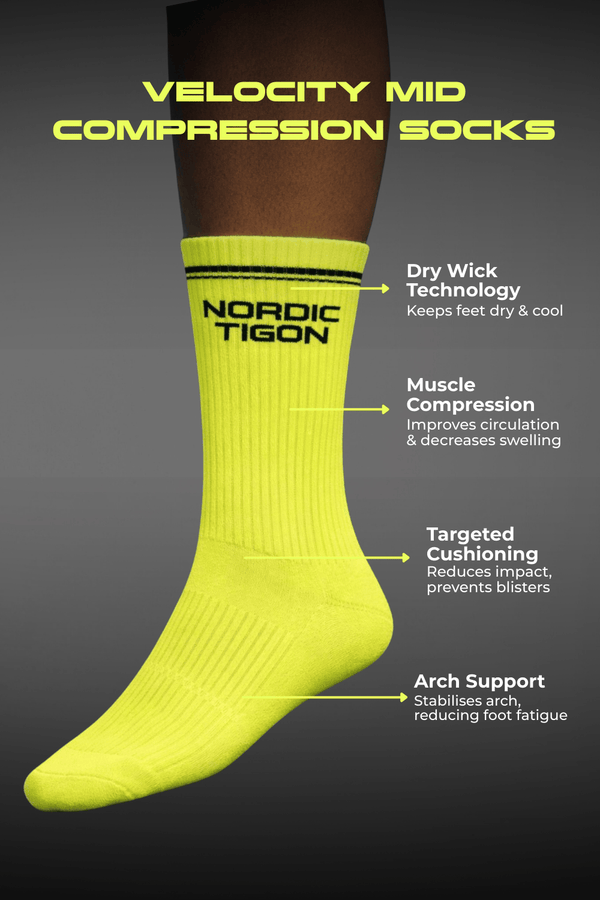
ATHLO+ stocks Nordic Tigon Velocity Compression Socks in mid and long lengths, from $20, along with Nordic Tigon compression arm sleeves.
Run in Compression with ATHLO+
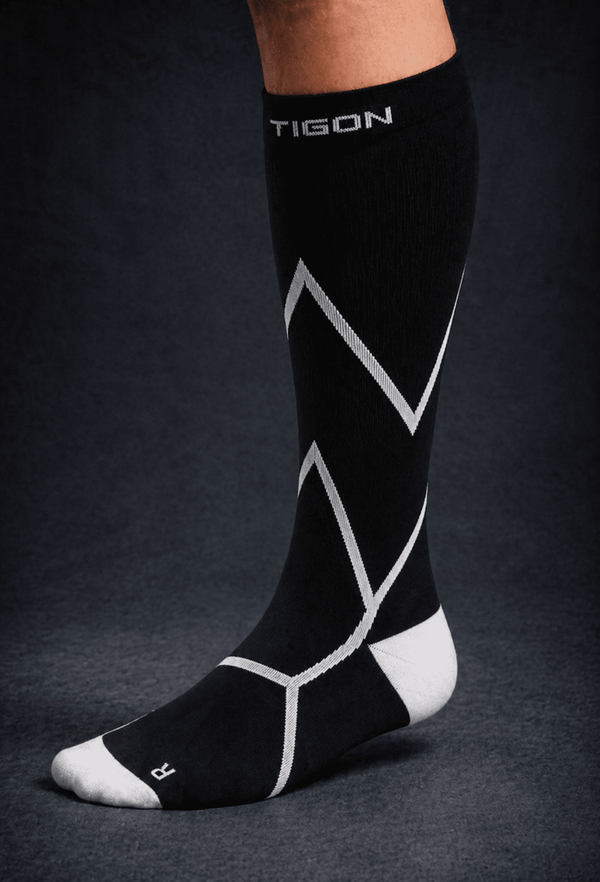
Looking for where to buy compression socks in Singapore? ATHLO+ carries the Nordic Tigon Velocity range. The socks are unisex and made from a blend of nylon, polyester, spandex and elastic, with moisture-wicking fabric to cut down on sweat build-up.
- Velocity Compression Socks, Mid (from $20): The shorter cut, in Charcoal Black or Flash Yellow, sizes S and L.
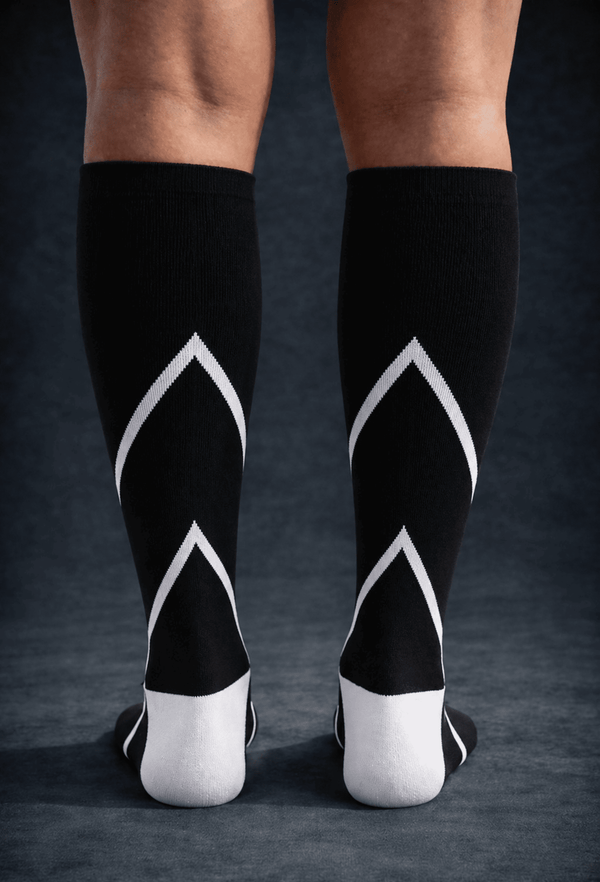
- Velocity Compression Socks, Long (from $45): The longer cut, in Charcoal Black or Flash Yellow, also in S and L.
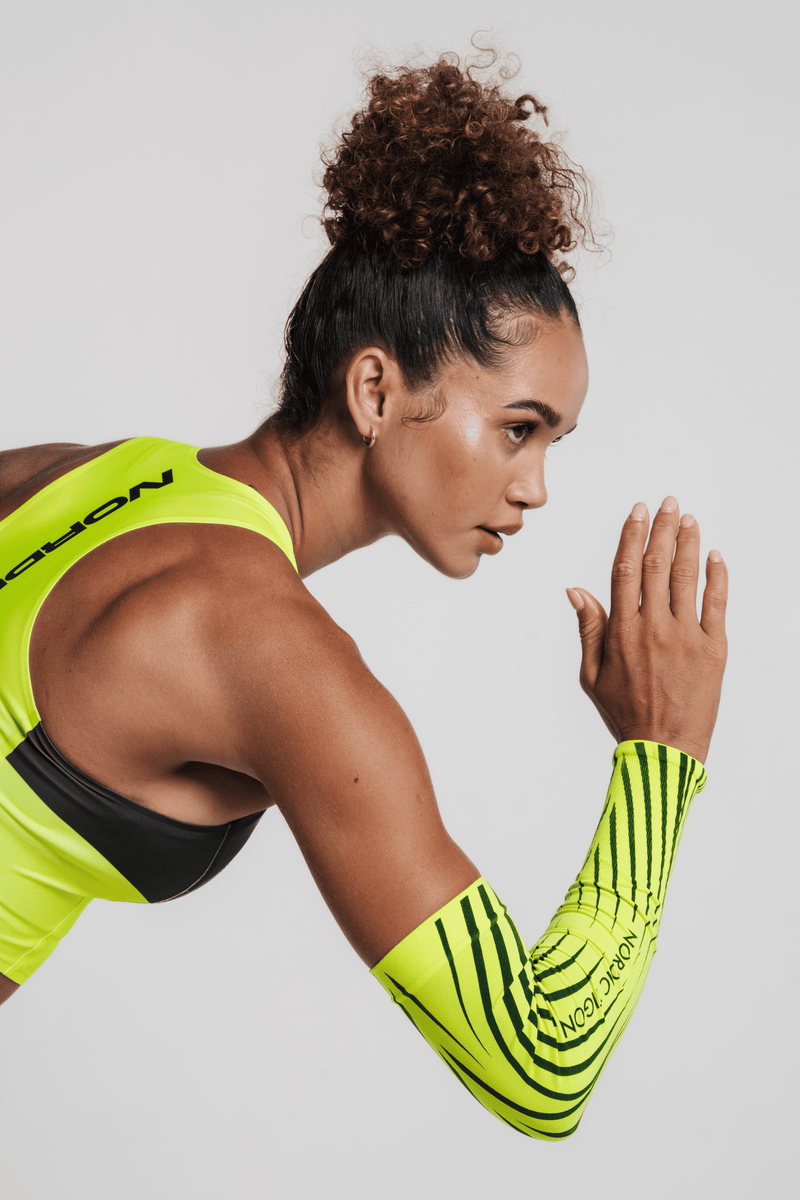
- Velocity Compression Sleeves ($38 a pair): Arm sleeves in a nylon–spandex blend that is quick-drying and moisture-wicking, in Charcoal Black or Flash Yellow.
Nordic Tigon describes the Velocity socks as targeted compression and does not list a mmHg rating on the product page, so treat them as running socks rather than medical stockings. Curious what the fabric blend is doing? Our guide to moisture-wicking fabrics explains it.
Shop Compression Socks on ATHLO+ →
Ready to plan the rest of your recovery week? Read our guide on building a weekly recovery routine next.
Sources
- Cleveland Clinic, What To Know About Compression Socks
- Cleveland Clinic, Can You Sleep in Compression Socks?
- HPRC, Do compression sleeves improve performance?
- Hagner-Derengowska et al., Effects of post-exercise compression garments on subsequent endurance performance and delayed-onset muscle soreness in endurance athletes, Frontiers in Physiology (2026)
- MedlinePlus, Compression stockings
- Kingston and Richmond NHS Foundation Trust, Compression socks and stockings
- Product details from the Nordic Tigon pages on ATHLO+, 3 November 2026.
Shop this story




More from Learn
 Garmin
Gifts for Runners in Singapore: A Christmas Guide by BudgetChristmas gifts for runners in Singapore, sorted by budget: gels, socks, flasks, sunglasses, Garmin watches and a lab...Read →
 Recovery
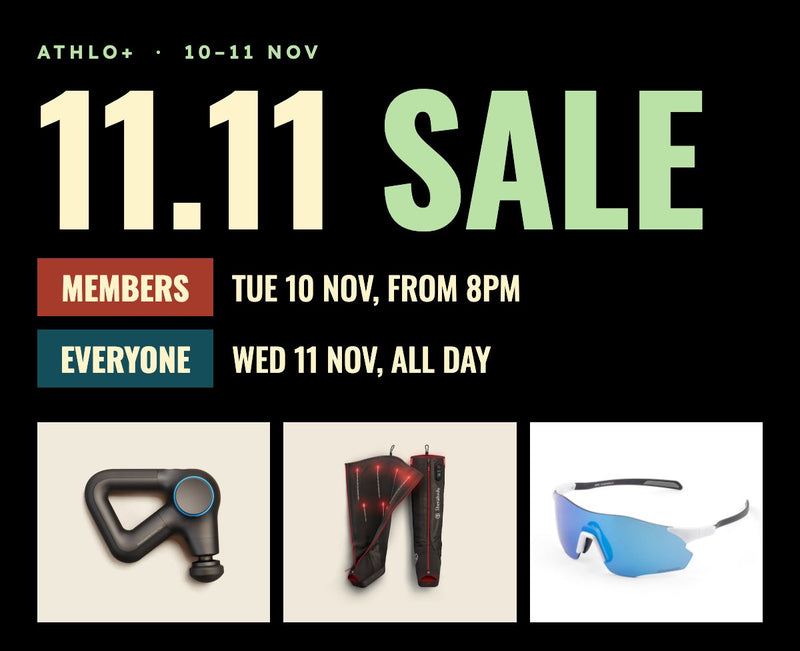
11.11 Sale Singapore 2026: Therabody, Running and Recovery DealsWhen the ATHLO+ 11.11 sale starts, what is on sale, the bundles and how members get in early....Read →
 Apparel
Moisture-Wicking Fabrics Explained: Activewear Buyer's GuideWhat is moisture wicking fabric and how does it work? Discover how technical activewear moves sweat, which materials...Read →