

Pilates vs Yoga: What Each Does for You, and Which to Try First
Shop the gear in this storyThe Short Version
- Pilates is a body-conditioning method built around core strength and controlled movement, done on a mat or a reformer. Yoga began in India thousands of years ago and pairs poses with breathing; many classes end with a short meditation.
- Both have research behind them for low back pain, balance and stress, but most effects are small to moderate and many of the trials are small. For back pain, neither has been shown to beat other kinds of exercise.
- For weight loss, the evidence is mixed for Pilates and weak for yoga. Treat either as one part of a wider routine.
- Start with Pilates for structured core work, or yoga if winding down is the goal. Cleveland Clinic's advice is to try both.
Your running group has started swapping one easy run a week for a reformer class. A colleague will not stop talking about her Saturday morning yoga class at the community club. And you are standing in the middle of it all, wondering which one you actually need, and whether the claims you keep hearing about either are true.
Here is what you need to know about Pilates and yoga: where each comes from, what a class involves, what the research really says each does, and how to try both in Singapore.
Pilates vs Yoga at a Glance
| Detail | Pilates | Yoga |
|---|---|---|
| Where it comes from | Developed by Joseph Pilates in the early 20th century | Began in India thousands of years ago |
| Main focus | Core strength through small, controlled movements | Poses linked with breath, often finishing with meditation |
| Equipment | A mat, or a reformer plus bands, foam rollers, barrels and bars | A mat, with blocks, straps and blankets to make poses easier |
| Low back pain | Helps more than minimal treatment; not shown to beat other exercise | Small, clinically unimportant gains over no exercise; similar to other back exercise |
| Balance (older adults) | Improved in a review of 6 trials | Small improvement in a review of 6 trials |
| Stress and mood | Large drops in anxiety and depression symptoms, from a few small trials | Moderate drop in perceived stress across 36 studies |
| Weight loss | Mixed: some reviews found small losses, one found mat Pilates no better than other training | No effect on weight in a review of 30 trials |
Source: Cleveland Clinic, Cochrane reviews of Pilates (2015) and yoga (2022) for low back pain, and meta-analyses on balance, stress and weight. Full list at the end.
Where Pilates and Yoga Come From
The two get lumped together because both happen on a mat and both are slow and deliberate. Their roots are very different.
Pilates: A Method Built for Rehab
Cleveland Clinic describes Pilates as a form of exercise and body conditioning developed by Joseph Pilates in the early 20th century, mostly as a method of injury recovery for dancers. It calls Pilates a form of strength training, though one that focuses more on improving muscle tone than building muscle.
Yoga: An Ancient Practice From India
Yoga began in India thousands of years ago, and many styles have grown out of it since. Yoga instructor and retired paediatrician Dr Johanna Goldfarb puts the difference simply for Cleveland Clinic: "Yoga has much more of a spiritual aspect to it, while Pilates is more about an approach to rehab." Both share a focus on breath, concentration, precise movement and alignment.
What Actually Happens in a Class
Mat Pilates vs Reformer Pilates
Pilates can be done on a mat or on specially designed apparatus, including a bed-like structure called a reformer. Studios may also add resistance bands, foam rollers, barrels and bars to give your muscles more of a challenge. Do not assume the mat is the gentle option:
- Mat Pilates: you are working your body against gravity, and Cleveland Clinic notes that freeform Pilates can actually be harder on the back than using a reformer.
- Reformer Pilates: the machine adds resistance, and Dr Goldfarb says the equipment in Pilates is often added to make sure exercise can occur with a safe alignment. If you ever buy one for home, learn the correct alignment with an instructor first.
- Both: neither is easy, and a lot of studio classes use both. Cleveland Clinic suggests weighing your fitness level, finances and personal comfort when you choose.
The Common Yoga Styles
| Style | What to expect | Good for |
|---|---|---|
| Hatha | A general style mixing standing and seated poses, each held for several breaths | Beginners: it teaches the foundations |
| Vinyasa or flow | An active style that moves you through loops of postures with your breath | Experienced students; beginners should look for slow flow |
| Yin and restorative | Slow, meditative, floor-based; restorative poses are held for 10 minutes or longer | Rest, recovery and all levels |
| Iyengar | A slow, strong practice with poses held for longer | All ages, including people with injuries or physical limitations |
| Ashtanga | Set sequences of poses across six levels | Experienced students: even the entry levels are challenging |
| Hot and Bikram | Bikram is a 90-minute class in a room heated to 40°C | People in good health with previous yoga experience |
Source: Cleveland Clinic's guide to the main types of yoga.
What the Research Says Each Does
This is where the marketing and the science part ways. Both practices have a growing body of trials, but many are small, and the honest summary is usually "some benefit, modest size".
Low Back Pain
- Pilates: a 2015 Cochrane review of 10 trials (510 people) found low quality evidence that Pilates reduces pain compared with minimal intervention, with a medium effect size in the short term. It found no conclusive evidence that Pilates is superior to other forms of exercise, and said the choice may come down to preference and cost.
- Yoga: a 2022 Cochrane review of 21 trials (2,223 people) found yoga gave small and clinically unimportant improvements in back function and pain compared with no exercise, and probably little or no difference from other back exercise. Yoga also raised the risk of side effects, mainly more back pain: 43 in 1,000 people with yoga against 9 in 1,000 with no exercise.
- Against each other: a 2022 network meta-analysis of 118 trials (9,710 adults) found that almost every type of exercise helped chronic low back pain. Pilates had the highest likelihood of reducing pain and disability, though rankings like this mix head-to-head trials with indirect comparisons.
The takeaway: moving helps a sore back, and Pilates ranks well among the options. If you have back pain that is not settling, get it assessed first. Our guide on when to see a physio helps you decide.
Balance
Both balance reviews here are in older adults. A 2016 meta-analysis of 6 trials (307 people aged 60 and over) found yoga had a small effect on balance and a medium effect on mobility. A 2020 meta-analysis of 6 trials (261 older adults) found an overall effect in favour of Pilates for postural balance. The yoga review's authors say more research is needed to find out whether the gains translate to fewer falls.
Flexibility and Strength
- Pilates: a 2026 review of 12 studies in about 540 adult women found Pilates improved sit-and-reach flexibility, but found no pooled effect on handgrip strength or vertical jump. The authors ask for cautious interpretation because the studies varied widely.
- Yoga: in a 10-week study of 26 male college athletes, the group doing yoga twice a week made significant gains in flexibility and balance, while the group that did no yoga did not. A 2025 review of yoga in track and field athletes reported moderate strength gains and better flexibility and balance, from studies of fair quality.
Stress and Mood
- Yoga: a 2025 meta-analysis of 36 studies found a moderate effect of yoga on reducing perceived stress, with a lot of variation between studies. A 2024 review of stressed adults rated the evidence for short-term stress relief as low quality.
- Pilates: a 2018 meta-analysis found large reductions in symptoms of depression and anxiety, but from a small number of trials with small samples, and its authors call for more rigorous studies.
Both practices help, most of the effects are modest, and neither is a cure-all.
Do Pilates or Yoga Help in Other Sports?
Only a handful of studies test this directly, and they are small. Here is what exists.
Runners
In a 2018 trial, 32 trained runners were split into a 12-week Pilates programme or a control group. The Pilates group's 5km time dropped from 25.65 to 23.23 minutes, against 25.33 to 24.61 minutes for the controls, and their running cost less energy. It is one study, but it fits the wider case for strength work. Read our guide to strength training for runners for the rest.
Court and Field Sports
- Football: in a 2025 trial of 30 players, reformer and mat Pilates groups both improved on balance, hopping and sprint tests, and the reformer group improved more on agility, passing and single-leg hops.
- Volleyball: in a 2025 trial of 26 players, adding yoga twice a week improved flexibility, balance, endurance and service accuracy more than strength exercises did.
- Tennis: in a 2023 trial of 40 junior players aged 6 to 18, eight weeks of yoga delivered remotely improved core strength and stability, flexibility and balance tests.
HYROX
We could not find a study of Pilates or yoga in HYROX athletes. The general points above on strength, flexibility and balance are what you have to go on, so treat a class as an add-on to your HYROX training, not a replacement for it.
Pilates or Yoga for Weight Loss?
Set your expectations low. Cleveland Clinic points out that Pilates is not as heavy a cardiovascular workout and should be part of a well-balanced exercise programme. The research says much the same:
- Yoga: a 2016 meta-analysis of 30 trials (2,173 people) found no effects on weight, BMI, body fat percentage or waist circumference. In overweight people only, yoga lowered BMI compared with usual care, but the authors warn the result was not robust.
- Mat Pilates: a 2020 review of 10 studies found mat Pilates no better than a control condition or other types of training for body composition.
- Pilates in overweight adults: a 2021 meta-analysis of 11 trials (393 people) found an average weight loss of 2.4kg, but no significant change in waist circumference or lean body mass.
- Hot yoga: Cleveland Clinic notes the calorie data just does not exist yet for hot yoga specifically.
If weight loss is the main goal, use either one alongside other strength training and cardio rather than instead of them.
Which Should You Try First?
| If you want… | Start with | Why |
|---|---|---|
| Structured core and posture work | Pilates | It is built around core strength and controlled movement |
| Strength after an injury (once cleared) | Pilates | Dr Goldfarb's advice is to go to Pilates if you need physical strengthening |
| A way to wind down | Yoga | Learning to relax is what makes yoga useful for people who are stressed |
| Flexibility | Either | Both improved flexibility in trials; Yin and Hatha are gentle starts |
| Cross-training for running | Pilates | It has the one runner trial with a faster 5km |
Dr Goldfarb's own advice is to try both yoga and Pilates before you give up on exploring one or the other. Cleveland Clinic suggests up to two to three sessions a week, between other strength training and cardio.
Safety: Pregnancy, Injuries and Heat
Injuries and Health Conditions
A systematic review of 9 studies found that most yoga injuries were mild and short-lived, and the risks were comparable to those of people who do not practise yoga, though yoga carried a higher risk of meniscus injuries in the knee. Its authors advise people with serious acute or chronic illnesses to seek medical advice first. Cleveland Clinic adds that if you have an injury or health condition that limits your mobility, high blood pressure or anaemia, you should check with your doctor which poses to avoid or modify. Tell your instructor about any injury before class.
Pregnancy
- Ask first: the NHS says that if you have a health condition, you can speak to your midwife about activities that are safe for you, and that it is not recommended to start a new vigorous activity in pregnancy.
- In class: tell the instructor you are pregnant, and in later pregnancy avoid lying flat on your back for more than a few minutes.
- Skip the heat: Cleveland Clinic says hot yoga is not suggested for people who are pregnant or have a heart condition.
- The research: a 2025 meta-analysis of 11 studies (538 women) linked Pilates in pregnancy with shorter labour and less labour pain, but only 3 of the 11 studies had a low risk of bias. Your doctor or midwife is the person to clear you.
Hot Yoga in a Hot Country
Most hot yoga rooms are set somewhere between 90 and 105°F (about 32 to 41°C). Because you sweat a lot, proper hydration is essential, and Cleveland Clinic warns the heat can aggravate asthma. If you feel dizzy or light-headed, stop. Our guide to working out your sweat rate explains how much fluid you lose.
How to Try Pilates and Yoga in Singapore
- Community clubs: courses are listed on onePA, the People's Association site. At the time of writing, listings included an 8-session beginners' mat Pilates course for S$90 to S$100 and an 8-session Hatha yoga course marked suitable for beginners for S$80 to S$85. You bring your own mat.
- Studios: if you go private, book a beginner class first: Hatha, slow flow or an introductory mat Pilates session.
- Check the teacher: Cleveland Clinic notes there is no licence required to teach Pilates, so ask about an instructor's training and whether they belong to a professional body.
Kit Up for Class with ATHLO+
No kit makes you better at Pilates or yoga. What helps is clothing that stretches with you and copes with Singapore sweat. ATHLO+ stocks Nordic Tigon kit, and if an old injury is the reason you are looking at either class, a physio can tell you where to start.
- Nordic Tigon Women's Velocity Power Bra (S$90): high-stretch fabric with a breathable lining for moisture management, and quick-drying.
- Nordic Tigon Women's Velocity Tights (S$109): a close fit with a 3-inch length, stretch fabric, and a breathable, moisture-wicking design at 100g.
- Nordic Tigon Men's Velocity Tights (S$109): a close fit with a 5-inch length, stretch fabric and a breathable, moisture-wicking design.
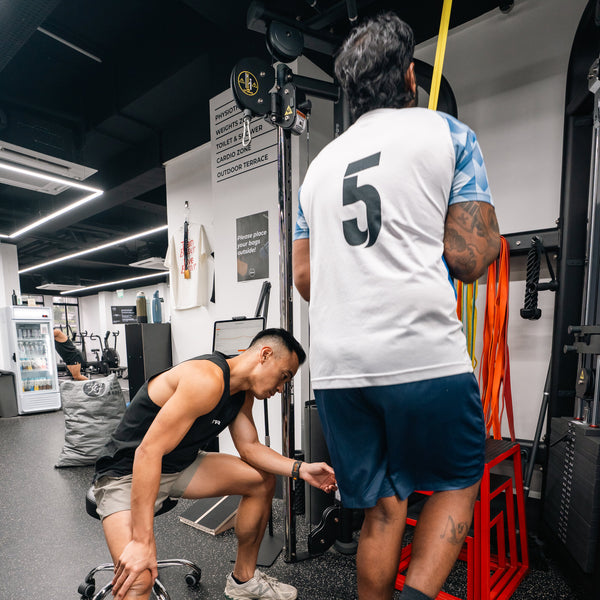
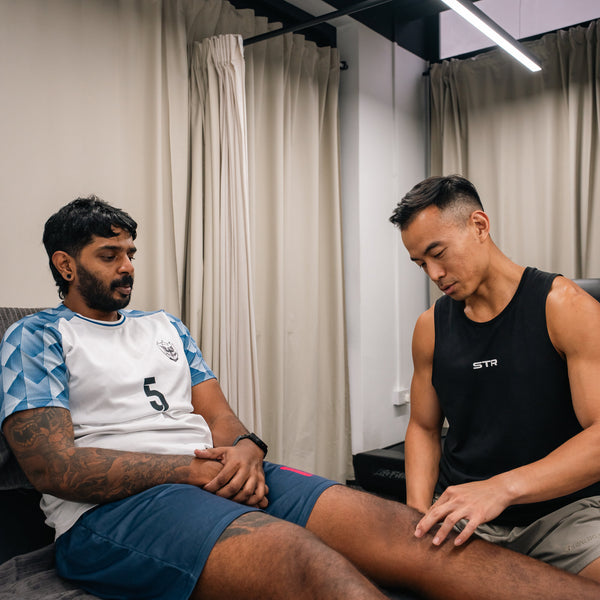
- STR Fitness Club Physiotherapy (S$250): a 60-minute in-person session with a qualified sports physiotherapist, at Clarke Quay or Bedok.
For how technical fabrics handle sweat, read our guide to moisture-wicking fabrics.
Ready to build the strength that sits behind both? Read our guide to strength training for runners next.
Sources
- Cleveland Clinic. Yoga vs. Pilates: Which Is Right for You? Health Essentials.
- Cleveland Clinic. Pilates: What It Is and Health Benefits. Health Essentials.
- Cleveland Clinic. Yoga: 7 Types and Finding the Right Class. Health Essentials.
- Cleveland Clinic. Is Hot Yoga Right for Me? Health Essentials.
- Yamato TP et al. Pilates for low back pain. Cochrane Database of Systematic Reviews, 2015.
- Wieland LS et al. Yoga for chronic non-specific low back pain. Cochrane Database of Systematic Reviews, 2022.
- Fernández-Rodríguez R et al. Best Exercise Options for Reducing Pain and Disability in Adults With Chronic Low Back Pain: Pilates, Strength, Core-Based, and Mind-Body. A Network Meta-analysis. Journal of Orthopaedic & Sports Physical Therapy, 2022.
- Youkhana S et al. Yoga-based exercise improves balance and mobility in people aged 60 and over: a systematic review and meta-analysis. Age and Ageing, 2016.
- Casonatto J, Yamacita CM. Pilates exercise and postural balance in older adults: A systematic review and meta-analysis of randomized controlled trials. Complementary Therapies in Medicine, 2020.
- Bajčetić Č et al. Effects of Pilates Programs on Body Composition, Flexibility, Muscular Strength, Balance, Functional Performance and Respiratory Function in Adult Women: A Systematic Review and Meta-Analysis. Sports, 2026.
- Polsgrove MJ et al. Impact of 10-weeks of yoga practice on flexibility and balance of college athletes. International Journal of Yoga, 2016.
- Singh D et al. Effect of yoga on selected performance metrics and mental health of track and field athletes: A systematic review. Journal of Bodywork and Movement Therapies, 2025.
- Rhoads MC et al. Yoga as an intervention for stress: a meta-analysis. Health Psychology Review, 2025.
- Schleinzer A et al. Effects of yoga on stress in stressed adults: a systematic review and meta-analysis. Frontiers in Psychiatry, 2024.
- Fleming KM, Herring MP. The effects of pilates on mental health outcomes: A meta-analysis of controlled trials. Complementary Therapies in Medicine, 2018.
- Finatto P et al. Pilates training improves 5-km run performance by changing metabolic cost and muscle activity in trained runners. PLoS One, 2018.
- Yılmaz O et al. Randomised controlled study on the effects of pilates exercises in soccer: Comparing mat and reformer methods on physical and technical performance. PLoS One, 2025.
- Erkan Özalp R et al. The potential effects of a holistic yoga intervention on performance and injury risk in volleyball players: a randomized controlled trial. Journal of Sports Medicine and Physical Fitness, 2025.
- Gergüz Ç, Aras Bayram G. Effects of Yoga Training Applied with Telerehabilitation on Core Stabilization and Physical Fitness in Junior Tennis Players: A Randomized Controlled Trial. Complementary Medicine Research, 2023.
- Lauche R et al. A systematic review and meta-analysis on the effects of yoga on weight-related outcomes. Preventive Medicine, 2016.
- Cavina APS et al. Effects of the Mat Pilates Method on Body Composition: Systematic Review With Meta-Analysis. Journal of Physical Activity and Health, 2020.
- Wang Y et al. Pilates for Overweight or Obesity: A Meta-Analysis. Frontiers in Physiology, 2021.
- Cramer H et al. Injuries and other adverse events associated with yoga practice: A systematic review of epidemiological studies. Journal of Science and Medicine in Sport, 2018.
- Li Y et al. Pilates exercise in pregnancy: a systematic review and meta-analysis. BMC Sports Science, Medicine and Rehabilitation, 2025.
- NHS. Exercise in pregnancy.
- People's Association, onePA. Pilates - Matwork for Beginners (HealthierSG) and Hatha Yoga (Elementary) (HealthierSG) course listings, 3 November 2026.
- Product details from the Nordic Tigon and STR Fitness Club pages on ATHLO+, 3 November 2026.
- Cover photo: Erin Ong Yoga & Fitness, via SportPlus.sg.
Shop this story


More from Learn
 Fitness
How Many Days a Week Should Runners Do Strength Training?How often runners should strength train, how long before it works, what to do in race season and...Read →
 Fitness
Should I Run Before or After a Strength Workout?Run first or lift first? What the research says about the order of running and strength training, how...Read →
 FORGED by ReFormd
AIA HYROX Singapore 2026: Dates, Venue, Divisions and How to PrepareAIA HYROX Singapore returns to Singapore EXPO from 26 to 29 November 2026. The dates, divisions, stations, provisional...Read →