

Electrolytes 101: Sodium, Potassium, and Why Plain Water Isn't Enough
Shop the gear in this story
isn't enough
 1 / 82 / 8
in numbers
3 / 8most of the work
4 / 85 / 8then test
6 / 8one flask

 7 / 8
do you sweat?
8 / 8The Short Version
- Sodium is what you lose most in sweat, and some runners lose several times more than others.
- On long, hot runs, endurance athletes lose about 1,190mg of sodium an hour on average.
- Electrolytes replace what you sweat out. They do not make it safe to drink more than you need.
"Stay hydrated and drink plenty of water" is the oldest advice in sport. Then you finish a Sunday long run along East Coast Park with white salt lines drying on your cap, and it is obvious that sweat is not just water.
Every litre you sweat takes sodium with it, and in Singapore's heat the litres add up fast. Here is what electrolytes actually do, how much sodium runners lose, and where plain water stops being enough.

Photo: SportPlus.sg / Isis Ang
What Runners Lose in Sweat
| Measure | Typical figure |
|---|---|
| Sweat rate, most athletes | About 0.5 to 2.0 litres an hour |
| Sweat rate, endurance athletes on average | 1.28 litres an hour |
| Sodium in sweat | About 10 to 90 mmol per litre (roughly 230mg to 2,070mg) |
| Sodium lost, endurance athletes on average | 51.7 mmol an hour (roughly 1,190mg) |
Why Sodium Matters Most
Electrolytes are minerals that carry an electrical charge in your body fluids. Sweat carries several of them, but one does most of the work.
- Sodium: It is the electrolyte you lose in the greatest amounts, and the one with the biggest effect on your fluid balance, because it helps your body hold on to water and keep your blood volume up.
- Potassium: You lose it too, but at much lower concentrations, close to the levels already in your blood.
- Your Own Mix: How much you sweat, and how salty it is, changes with effort, weather, heat acclimation, fitness and body size. Two runners on the same route can lose very different amounts.
Sweat sodium ranges from about 10 to 90 mmol per litre. The saltiest sweaters lose many times more than the least salty.
When Plain Water Stops Being Enough
On long, hot sessions you can sweat a litre or more an hour, and a meaningful amount of sodium goes with it. The American College of Sports Medicine says drinking during exercise should prevent both excessive dehydration and big swings in electrolyte balance, and that drinks with electrolytes and carbohydrate can beat water alone in some situations. Because everyone sweats differently, it recommends an individual plan rather than one rule for all.
What Electrolytes Will Not Do
Here is the catch: electrolytes do not protect you from drinking too much. Exercise-associated hyponatremia, where blood sodium falls below 135 mmol/L, is driven mainly by drinking beyond thirst. In a study of a 161km ultramarathon, it was unrelated to how much sodium runners took in, and sodium supplements do not necessarily prevent it when someone overdrinks.
The symptoms can include confusion, headache, lethargy and, in severe cases, seizures. If a runner seems confused late in a long race, get them to the medical tent.
How to Find Your Own Numbers
- Your Sweat Rate: Weighing yourself before and after a run is the simplest and most accurate way to measure it. Our sweat rate guide walks you through the test.
- Your Sweat Sodium: A sweat test is the only way to know your number. Until you have one, treat your long, hot runs as the sessions that need sodium most.
Dial In Your Sweat Balance with SUPERnatural+ on ATHLO+
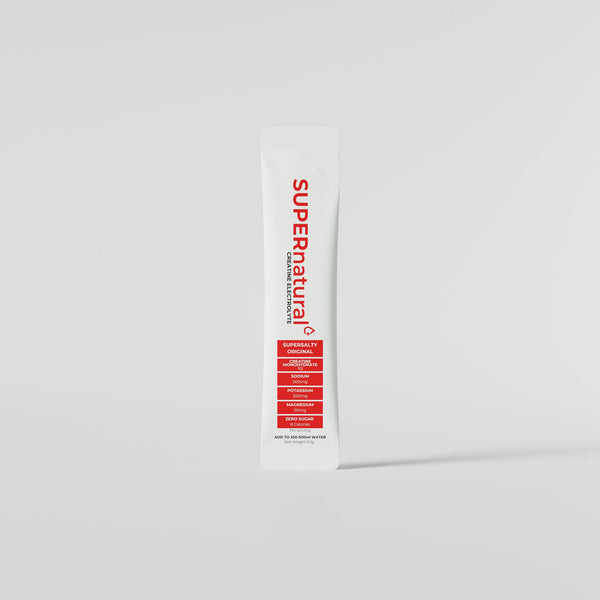
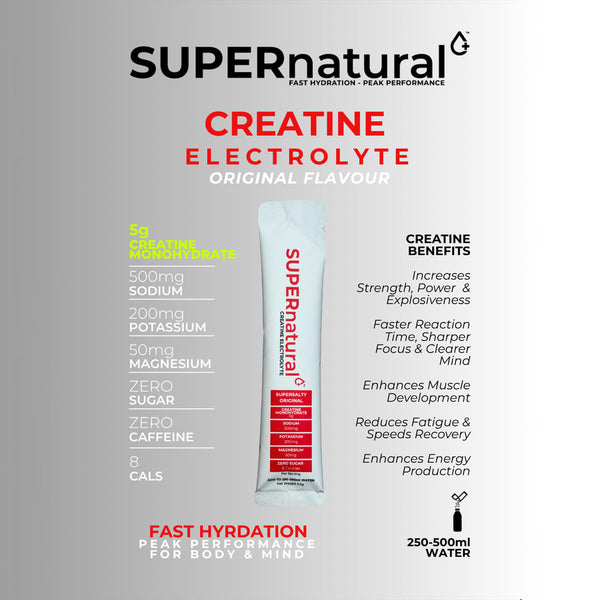
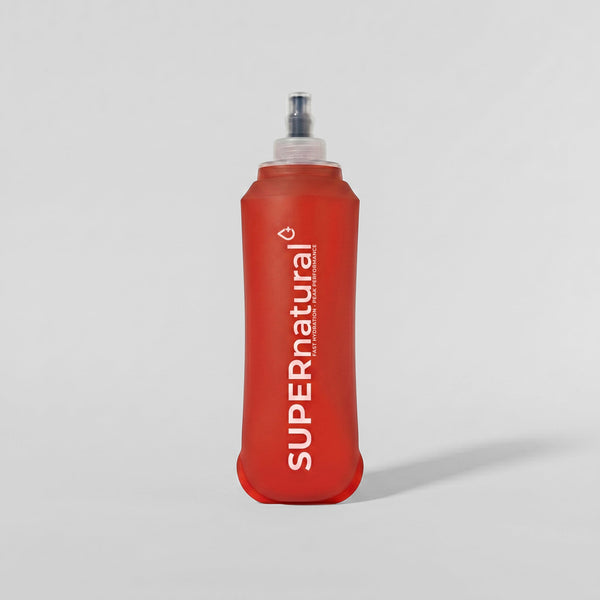
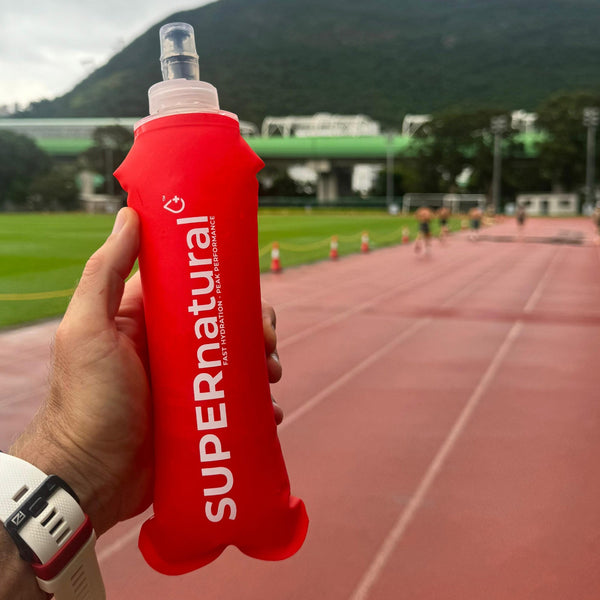
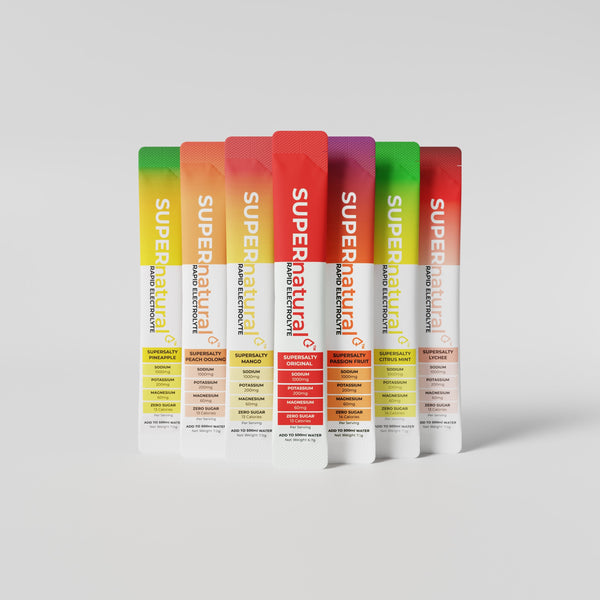
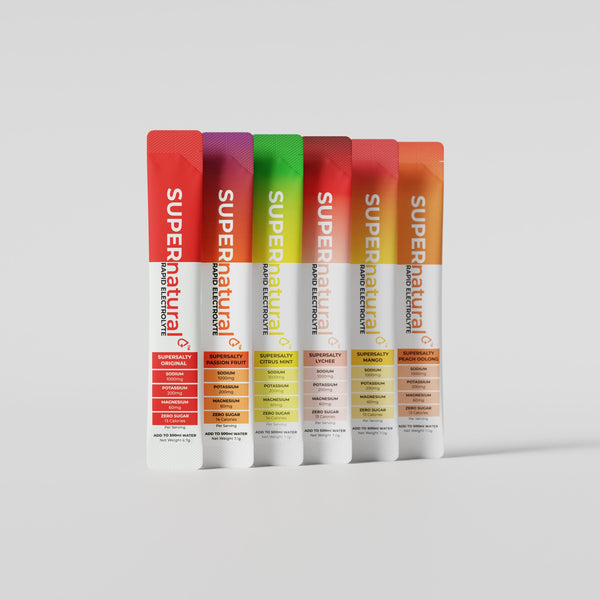
SUPERnatural+ SUPERsalty puts 1,000mg of sodium, 200mg of potassium and 60mg of magnesium in a single sachet, close to the average hourly sodium loss in the table above. Each sachet is sized for one 500ml SUPERflask, a soft flask that shrinks as you drink. The full range is in the SUPERnatural+ collection.
Ready to work out how much you sweat? Read our guide to calculating your sweat rate next.
Sources
- Baker LB. Sweating Rate and Sweat Sodium Concentration in Athletes. Sports Medicine, 2017.
- Barnes KA et al. Normative data for sweating rate, sweat sodium concentration, and sweat sodium loss in athletes. Journal of Sports Sciences, 2019. Data from 1,303 athletes.
- American College of Sports Medicine. Exercise and Fluid Replacement. Position stand, 2007.
- Hew-Butler T et al. Exercise-Associated Hyponatremia: 2017 Update. Frontiers in Medicine, 2017.
- Klingert M et al. Exercise-Associated Hyponatremia in Marathon Runners. Journal of Clinical Medicine, 2022.
- Milligram figures are converted at 23mg per mmol of sodium. Product details from the SUPERsalty and SUPERflask pages on ATHLO+, 2 November 2026.
More from News
 ANS Nutrition
How Many Carbs Do You Actually Need Per Hour of Exercise?How many carbs per hour do endurance athletes really need? Learn the science behind 30g to 90g hourly...Read →
 Massage Gun
 vs Foam Roller: Which Is Better for Muscle Recovery?Massage gun vs foam roller: which recovery tool is right for you? Compare localized percussive therapy against broad...Read →
 Garmin
Heart Rate Zones Explained: How to Train Smarter With Your Garmin Sports WatchStop turning easy runs into hard workouts. Learn how heart rate training zones work, how to set them...Read →