

Contrast Therapy for Athletes: Does Alternating Hot and Cold Actually Work?
Shop the gear in this story
therapy work?
 1 / 6
doing nothing
2 / 6or a sauna
3 / 6then again
4 / 6After lifting, no.
5 / 6at Shelter
6 / 6The Short Version
- Alternating hot and cold water beats resting after hard exercise, for soreness and for strength loss, up to four days later.
- It does not clearly beat other recovery methods, including a plain ice bath.
- The studies used hot and cold baths. A sauna-and-plunge circuit like Shelter's 5–15 minutes hot, 1–5 minutes cold, two or three rounds, is the same idea with less research behind it.
Step out of an 80-degree sauna, walk ten steps and lower yourself into an ice bath. Your skin tingles, your breath catches, and for a moment you forget about the 20km you ran that morning. Then you do it again.
Contrast therapy has moved from pro sports changing rooms into recovery clubs like Shelter in the CBD. But does going hot, cold, hot actually help you recover, or does it just feel dramatic? Here is what the research shows, what it does not, and how to run a session.

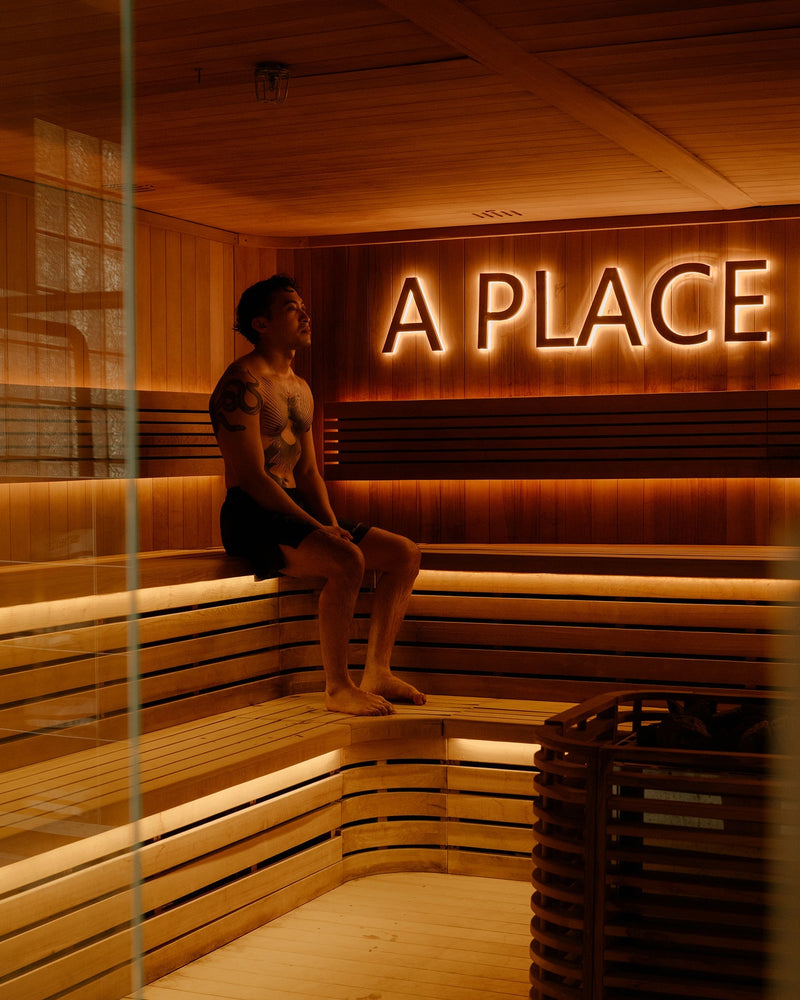
Photo: SportPlus.sg / Aldrich Goh
Contrast Therapy at a Glance
| In the research | Shelter's recommended routine | |
|---|---|---|
| Hot | Hot water at 35.5 to 45°C, 1 to 3 minutes | Warm sauna or hot soak, 5 to 15 minutes |
| Cold | Cold water at 8 to 15°C, usually 1 minute | Ice bath, 1 to 5 minutes |
| Rounds | Sessions of 6 to 24 minutes in total | 2 to 3 rounds |
| Afterwards | Not specified | Relax 5 to 10 minutes, and hydrate |
What Contrast Therapy Is Supposed to Do
The idea is simple. Heat opens up the blood vessels near your skin, cold squeezes them shut, and alternating the two is thought to act like a pump that reduces swelling. Researchers call this the "pumping" theory, and it is still a theory rather than an established mechanism.
What the Research Actually Shows
The clearest summary is a 2013 review in PLoS One that pulled together 18 trials of contrast water therapy after muscle-damaging exercise.
- Better Than Doing Nothing: Pooled data from 13 studies showed less muscle soreness than passive rest at every check, from under 6 hours to 96 hours after exercise.
- Less Strength Lost: It also reduced strength loss over the same period.
- Not Better Than the Alternatives: Against other methods, including cold water immersion, warm water, compression, active recovery and stretching, there was little evidence that any one approach was better.
- Treat It with Caution: All 18 trials carried a high risk of bias, and the authors noted the size of the benefit may matter most to elite athletes.
Better than doing nothing. Not clearly better than an ice bath.
Sauna Versus Hot Water
One detail is easy to miss. The trials alternated hot and cold water, with hot dips of only 1 to 3 minutes. A sauna session followed by an ice bath works on the same idea, but it is not what those studies tested, so treat the benefits as likely rather than tested.
How to Run a Session
Shelter's sign at Raffles Link sets out a simple routine, and it is a sensible starting point:
- Start Hot: 5 to 15 minutes in a warm sauna or hot soak. Shelter's hot sauna runs at 70 to 90°C.
- Ice Bath: 1 to 5 minutes in the cold plunge.
- Rinse and Repeat: 2 to 3 rounds.
- Relax: 5 to 10 minutes to finish, and remember to hydrate.
The same sign warns that prolonged exposure to cold and heat can lead to hypothermia, dehydration, dizziness and nausea. Get out early if you feel unwell, and tell the staff.

Photo: SportPlus.sg / Aldrich Goh
When Contrast Therapy Fits Your Week
| Your training | Contrast session? | Why |
|---|---|---|
| After long runs and hard intervals | Yes | Less soreness and strength loss than resting |
| Rest and easy days | Yes | No training session for the cold to interfere with |
| Straight after a strength session | Skip the cold part | Regular cold water after lifting reduced strength and muscle gains over 12 weeks |
Try Contrast Therapy at Shelter on ATHLO+
Shelter is a recovery club built around sauna and ice baths at 1 Raffles Link #01-01, open daily from 7am to 10pm. It is beginner-friendly and towels are provided. Whether you need to book depends on your membership or pass, so message Shelter and they will point you to the right option.
Ready to use the heat on its own? Read our guide to sauna for endurance next.
Sources
- Bieuzen F, Bleakley CM, Costello JT. Contrast Water Therapy and Exercise Induced Muscle Damage: A Systematic Review and Meta-Analysis. PLoS One, 2013.
- Roberts LA et al. Post-exercise cold water immersion attenuates acute anabolic signalling and long-term adaptations in muscle to strength training. The Journal of Physiology, 2015.
- Shelter's partner page on ATHLO+, and the Heat Contrast Therapy and Hot Sauna signs at Shelter, Raffles Link, read 2 November 2026.
Shop Recovery
More from Learn
 Ice Baths
 for Athletes: Benefits, Risks, and How Cold Is Cold Enough?Wondering if ice baths actually work? Discover the science of cold water immersion for athletes, ideal temperatures, timings,...Read →
 Recovery
Sauna for Endurance: What Heat Training Can Do for Your Next RaceSauna isn't just for relaxation. Learn the science of post-workout heat exposure, how it expands plasma volume, builds...Read →
 Recovery
11.11 Sale Singapore 2026: Therabody, Running and Recovery DealsWhen the ATHLO+ 11.11 sale starts, what is on sale, the bundles and how members get in early....Read →