

Padel in Singapore: How It Works, the Rules and Where to Play
Shop the gear in this storyThe Short Version
- Padel is a racquet sport for pairs, played on a court 10 metres wide by 20 metres long that is completely enclosed by walls and mesh fencing. You serve underhand: bounce the ball, then hit it at or below waist height.
- The ball may bounce once on your side, and after that bounce it stays in play off the walls. A shot that hits your opponents' walls before bouncing on their side loses you the point. Scoring is tennis scoring: 15, 30, 40, game.
- As listed on 3 November 2026, an hour on a doubles court ran from S$60 (Play! Padel Bedok, off-peak) to S$108 (Padel X, air-conditioned, weekday evening).
Inside Singapore Expo Hall 7, where you might expect a trade fair, there are five air-conditioned padel courts. On a weekday evening you will hear the game before you see it: the dull knock of a ball off the glass, then a scramble as it comes back at the player who thought the point was over.
Padel is young here. ActiveSG's February 2025 guide said it came to Singapore in 2020 and already had over 2,000 active players. If you have been invited to a game and have no idea what the walls are for, here is your guide to how padel works, the rules for beginners, where to play in Singapore and what it costs.
Padel at a Glance
| Detail | What to know |
|---|---|
| Court | 10m wide by 20m long, completely enclosed |
| Net | 0.88m high in the centre, rising to 0.92m at the ends |
| Players | Pairs, one on each side of the net |
| Serve | Underhand: bounce the ball, hit it at or below waist level, diagonally into the service box. Two tries |
| Bounces | One on your side, then the walls are in play |
| Scoring | 15, 30, 40, game; six games with a two-game lead win the set; two sets win the match |
| Court price | S$60 to S$108 an hour for a doubles court at the venues below |
Source: International Padel Federation (FIP) Rules of Padel, and venue pages as listed on 3 November 2026. Full list at the end.
What Is Padel?
Prime Padel, which runs courts in Singapore, puts it neatly: "Padel is what happens when tennis and squash have a baby." It is played on a smaller court than tennis, enclosed by clear walls, with a short-handled racket, pressurised balls and an underhand serve.
ActiveSG traces it to Mexico in 1969, when businessman Enrique Corcuera built a court at home with walls, and found the game more enjoyable once the ball was allowed to bounce off them. The sport's governing body is the International Padel Federation (FIP), and the rules in this guide come from its Rules of Padel, reviewed for application from 1 January 2026.
The Padel Court, Racket and Ball
The Court
The court is a rectangle 10 metres wide by 20 metres long, divided in half by a net. The service lines sit 6.95 metres from the net on each side. The net is 0.88 metres high at the centre, rising to 0.92 metres at the ends, a little lower than a tennis net. The court must be completely enclosed: at each end, the first 3 metres of the 4-metre enclosure is wall, and the surface can be cement, synthetic material or artificial grass.
The Racket and Ball
- Racket: solid, with no strings, and a hitting surface perforated with holes. Under FIP rules, head plus handle may not exceed 45.5 centimetres.
- Ball: it looks like a tennis ball, and ActiveSG notes padel balls have less pressure than tennis balls.
- Clothing and shoes: FIP's rules simply ask for suitable sports clothing and footwear. Swimwear is not allowed.
Padel Rules for Beginners
Serving: Bounce, Then Hit Below the Waist
- Stand behind the line: start with one foot behind the service line, and do not touch the service line or the imaginary centre line with your feet.
- Bounce it first: the server must bounce the ball on the ground before hitting it.
- Waist height or lower: the ball must be at or below waist level when you hit it, with at least one foot on the ground.
- Diagonal: the ball must pass diagonally over the net into the receiver's service box. The lines count as good.
- Two tries: if the first serve is not valid, you get a second.
- Watch the fence: a serve that bounces in the box and then touches the metal fence before its second bounce is a fault.
The receiver has to let the serve bounce in their service box, then hit it before it bounces a second time.
The Walls: How Many Bounces?
This is the part that confuses new players, so here it is plainly. Once the ball has bounced on your side, it stays in play if it then hits the walls or the fence, and you can return it any time before it bounces a second time. You can also play a shot off your own walls, as long as it then bounces in your opponents' court. Outside the serve, you can volley too.
What you cannot do is send the ball, directly or off your own walls, into your opponents' walls or fence before it bounces on their side. That loses the point.
Other Ways to Lose a Point
- Two bounces: the ball bounces a second time before you return it.
- Touching the net: you, your racket or anything you wear touches the net, the posts or your opponents' court while the ball is in play.
- Into your own fence: you hit the ball and it touches the metal fence or the ground on your own side.
- Double hit: you hit the ball twice.
- Reaching over: you hit the ball before it has come over the net.
Scoring: Tennis Rules, Plus the Golden Point
Points go 15, 30, 40, game. At three points each it is deuce, and a pair must then win two points in a row. The first pair to win six games with a two-game lead takes the set, with a tie-break at six games all, first to seven points by two. Two sets out of three win the match. You change ends after the first, third and every following odd game.
The rules also allow a "no advantage" format. At deuce, one deciding point, called the golden point, is played, and the receiving pair chooses which side to receive on. Ask which format you are playing before the first serve.
Where to Play Padel in Singapore
Every court below is private, and you book online. Rates and hours change, so check the venue's own page before you go. As listed on 3 November 2026:
| Venue | Where | Courts | Listed price, 60 minutes |
|---|---|---|---|
| Play! Padel Bedok | 200 Bedok North Ave 1 | 1 sheltered doubles court, 1 mini court (10m by 4m) | Doubles court S$60 off-peak, S$80 peak. Mini court S$30 off-peak, S$40 peak |
| Padel X | Singapore Expo Hall 7, 9 Somapah Road | 5 air-conditioned courts | On Playtomic, a Tuesday 3pm slot was S$78 and a 5pm slot S$108 |
| Prime Padel | Grand Copthorne Waterfront (6th floor, River Valley) and Sherwood Road, Dempsey | Two locations | Its website says entire court booking starts from S$90 |
Good to Know Before You Book
- Peak and off-peak: at Play! Padel Bedok, off-peak is Monday to Friday, 8am to 6pm. Peak is weekday evenings from 6pm to 10pm, and weekends and public holidays from 7am to 10pm.
- Air-conditioning: at Padel X, the air-conditioning starts from 10.45am. The venue is open daily from 8am to 11pm, 3 minutes from Expo MRT (exit C).
- How to book: Play! Padel's doubles court and Padel X are booked on Playtomic; Prime Padel has its own app.
- Splitting the bill: a doubles court holds four players, so an S$80 hour is S$20 each.
Padel vs Pickleball vs Tennis
All three are played over a net with a racket or paddle, and that is where the similarity starts to fade. The figures come from each sport's governing body.
| Padel | Pickleball | Tennis | |
|---|---|---|---|
| Court | 10m by 20m | 20 feet by 44 feet | 23.77m long; 8.23m wide for singles, 10.97m for doubles |
| Net height, centre | 0.88m | 34 inches | 0.914m |
| Walls | In play | None | None |
| Serve | Underhand, after a bounce; two tries | Underhand (or a drop serve); one try | Any style, hit before the ball touches the ground; two tries |
| Bounce rules | Return of serve must bounce; then volley freely | Serve and return must each bounce; no volleys from the kitchen | Return of serve must bounce; then volley freely |
| Scoring | 15, 30, 40, game; sets of six games | Games to 11, win by 2 | 15, 30, 40, game; sets of six games |
| Equipment | Solid, perforated racket | Solid paddle, plastic ball with holes | Strung racket |
ActiveSG's own comparison sums up the feel. Pickleball relies on precision and strategy over power, and its smaller court, slower speed and kitchen rule make it easy for beginners. Padel is faster-paced, mixing power with finesse and the use of the walls. Its advice: if you enjoy a tactical game, try pickleball; if you want something more dynamic, try padel.
Your First Padel Game
- Take an intro class: on 3 November 2026, Padel X listed an "Intro to Padel (Learn to Play)" class at S$58 on Playtomic, and Play! Padel runs weekly beginner group classes on Wednesday, Saturday and Sunday.
- Rent a racket: Play! Padel Bedok rents rackets at S$8 per racket per session, so there is no need to buy one for your first game.
- Let it come off the glass: it is tempting to chase every ball before it reaches the wall. Give it the bounce and let the wall bring it back to you.
- Serve gently: the serve is underhand and below the waist, so it is about placement, not pace. Getting it in matters more than hitting it hard.
- Agree the scoring: ask whether you are playing advantage or golden point before you start.
Gear Up for the Court with ATHLO+
ATHLO+ does not sell padel rackets or balls. What we stock is the kit you wear to a warm Singapore court. Prices as listed on 3 November 2026:
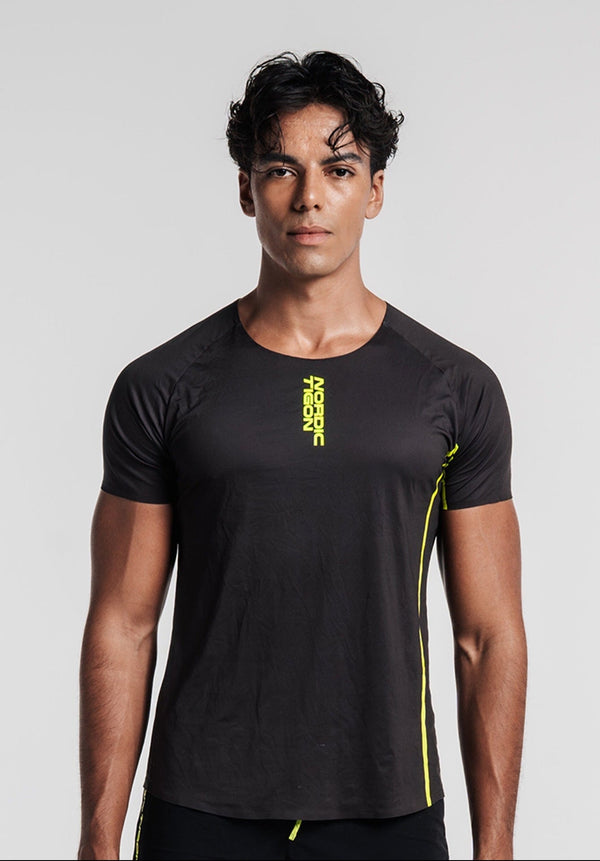
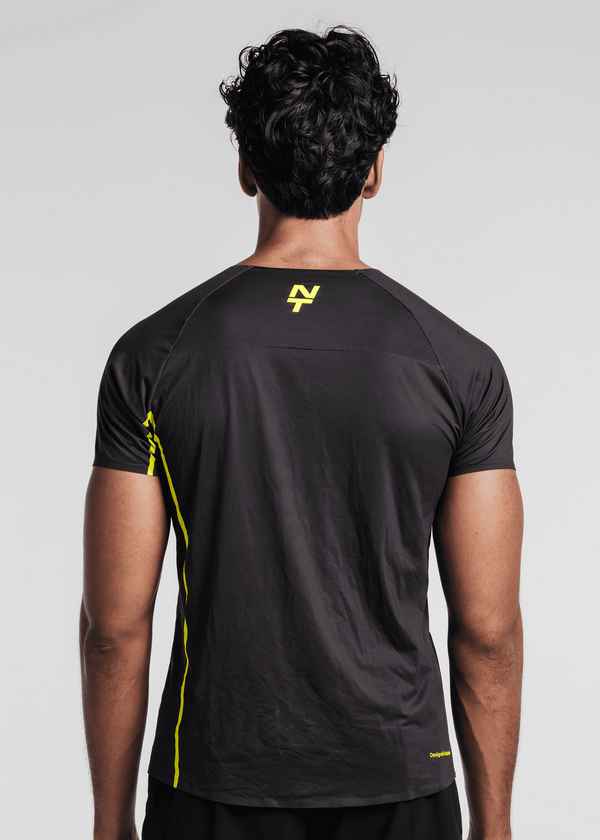
- Nordic Tigon Men's Velocity Fitted Tee (from S$97): 100% polyester that is quick-drying and wicks moisture, at 60g per piece.
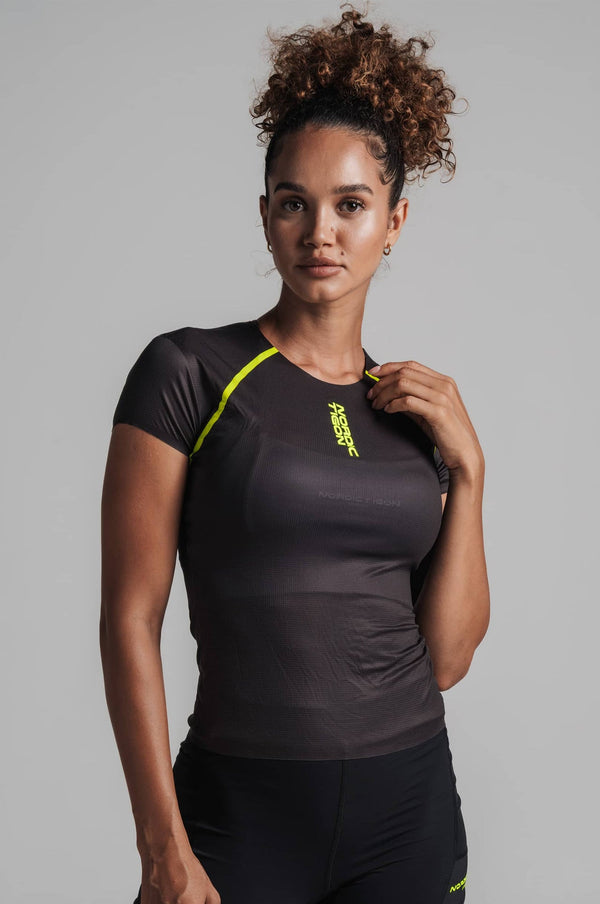
- Nordic Tigon Women's Velocity Fitted Tee (from S$97): 100% polyester that is soft, breathable and moisture-wicking, at 45g per piece.
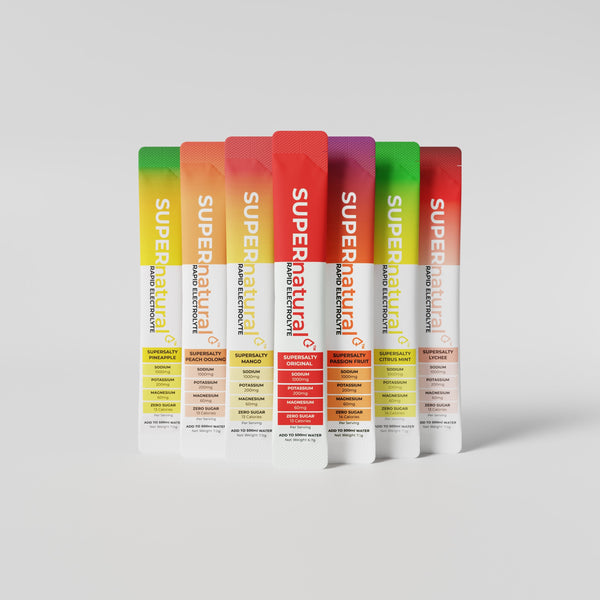
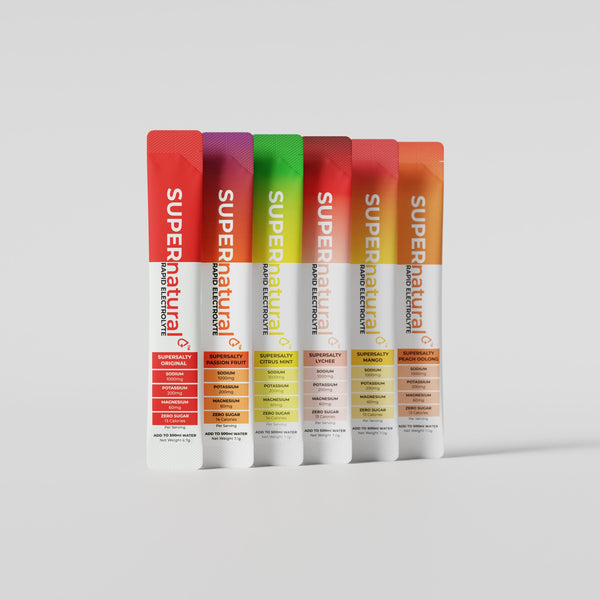
- SUPERnatural+ SUPERSALTY (from S$24 for 10 sachets): each sachet has 1000mg of sodium, 200mg of potassium and 60mg of magnesium, for long sessions in the heat. Read Electrolytes 101 for when salt matters.
Ready to sort out your court kit? Read our guide to moisture-wicking fabrics next.
Sources
- International Padel Federation (FIP). Rules of Padel, review of application 1 January 2026.
- International Tennis Federation. Rules of Tennis 2026.
- USA Pickleball. What Is Pickleball? and Basic Rules Summary, revised 1 January 2026.
- ActiveSG. What is the difference between Pickleball and Padel?, 24 February 2025.
- Play! Padel. Court rental rates at Bedok, 3 November 2026.
- Padel X. Club page and court availability on Playtomic, 3 November 2026.
- Prime Padel. Home page, 3 November 2026.
- Product details from the Nordic Tigon and SUPERnatural+ pages on ATHLO+, 3 November 2026.
- Cover photo: SportPlus.sg / Aldrich Goh.
Shop this story

More from Learn
 Pickleball
 in Singapore: Where to Play, How to Book and What You NeedWhere to play pickleball in Singapore, how to book an ActiveSG court, what it costs, the rules and...Read →
 Pilates
 vs Yoga: What Each Does for You, and Which to Try FirstPilates and yoga compared: where each comes from, mat vs reformer and the main yoga styles, what the...Read →
 Bouldering
 in Singapore: Gyms, Grades and Your First VisitA beginner's guide to bouldering in Singapore: how it differs from rope climbing, how V-scale and Font grades...Read →