

Your First Half Marathon: The Complete Race-Day Fuelling and Nutrition Plan
Shop the gear in this storyThe Short Version
- A half marathon takes most runners well over an hour, so plan on fuel: sports nutrition guidance for long, hard efforts is about 30 to 60g of carbohydrate an hour.
- With a 4:30am flag-off at the BYD half, make dinner your big carb meal, then have a small, familiar breakfast at least an hour before you start.
- Drink to thirst rather than at every station, and use only the gels and breakfast you have already tried on a long run.
The alarm goes off at 2.45am. Outside it is still dark and warm, there are no early trains on half marathon morning, and somewhere in the next hour you need to eat, get to the F1 Pit Building and find your pen before the 4:30am gun. If this is your first half marathon, that early start is the part nobody warned you about.
The 21.1km itself is the reward for months of training. Getting your food and drink right is what lets you enjoy it. Here is your complete guide to fuelling your first half marathon: the night before, race morning and the race itself, with the numbers taken from sports nutrition research and the race details from the BYD Singapore International Marathon's own pages.
Race-Day Fuelling at a Glance
| When | What to do |
|---|---|
| The day before | Eat your normal carb-based meals and keep fibre and fat lower at dinner |
| Race morning | A small, familiar breakfast at least 60 minutes before the start |
| During the race | About 30 to 60g of carbohydrate an hour, from gels you have tested |
| Fluids | Drink to thirst; do not force a drink at every station |
Source: International Society of Sports Nutrition position stand on nutrient timing (2017), Jeukendrup's reviews in Sports Medicine (2014, 2017) and a 2016 study of runners at Singapore races. Full list at the end.
Your Race: The BYD Half Marathon
If you are running the adidas Half Marathon at the BYD Singapore International Marathon, the details that shape your fuelling are these:
- Date: Saturday 5 December 2026.
- Start and finish: it starts at the F1 Pit Building and finishes at the National Stadium.
- Flag-off: 4:30am, which is the reason breakfast needs a plan.
- Cut-off: 3 hours 45 minutes, so even walkers will be out for well over an hour.
Our BYD Singapore Marathon guide covers race pack collection, bag deposit and getting to the start.
The Night Before: Make Dinner the Main Meal
There is no need for a giant pasta party. For an effort of this length, normal carbohydrate-based meals in the days before will keep your glycogen stores topped up.
Why Dinner Matters More Than Usual
With a 4:30am start, breakfast has to be small, so dinner the night before does more of the work. Research summarised by the International Society of Sports Nutrition found that a high-carbohydrate meal 4 hours before exercise increased both muscle and liver glycogen. You cannot leave four hours between breakfast and a 4:30am gun, but you can make dinner a familiar, carb-heavy meal: rice, noodles, bread or potatoes, with a moderate amount of protein.
Go Easy on Fibre and Fat
A review of gut problems in athletes found that fibre intake, fat intake and highly concentrated carbohydrate drinks seem to increase how often stomach problems happen. Save the big salad, the fried food and the creamy sauces for after the race.
Race Morning: A Small Breakfast You Know
Studies that gave athletes carbohydrate at least 60 minutes before exercise found no harm to performance, and several found a benefit. That is your working window.
- Timing: eat at least an hour before your start. For a 4:30am flag-off, that means eating around 3am or earlier, so set the alarm with that in mind.
- What to eat: something light and carb-based that you have already eaten before a long run, such as white toast with jam, a banana or a small bowl of plain rice porridge.
- What to skip: anything new. Race morning is not the time to find out how a new breakfast sits.
Race day is for the plan you have already practised, not for a new one.
During the Race: How Many Gels
The International Society of Sports Nutrition advises that long bouts of hard exercise, over 60 minutes, call for carbohydrate at about 30 to 60g an hour. Asker Jeukendrup's 2014 review gives a similar picture by duration: around an hour, small amounts or even a mouth rinse can help, and for two to three hours you can work up to about 60g an hour.
Turning Grams Into Gels
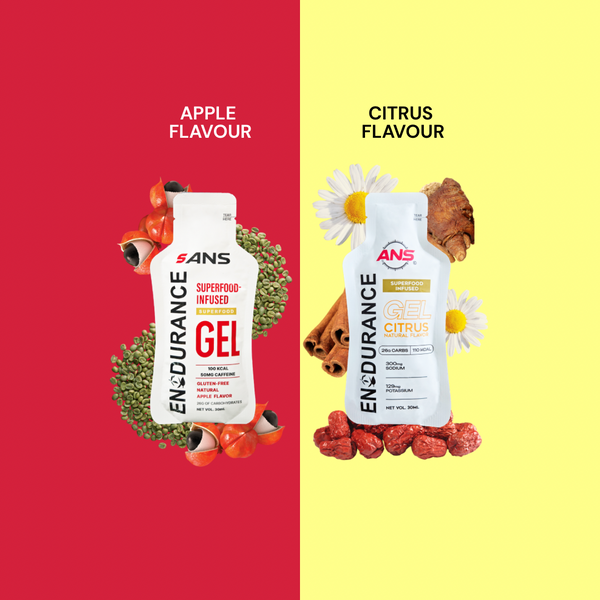
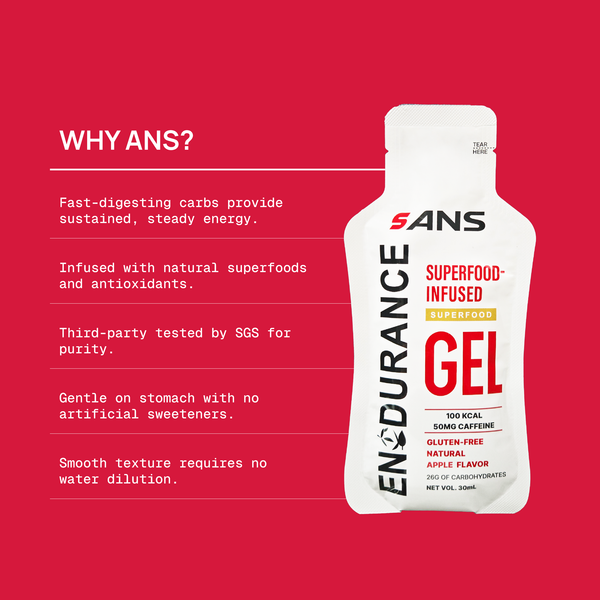
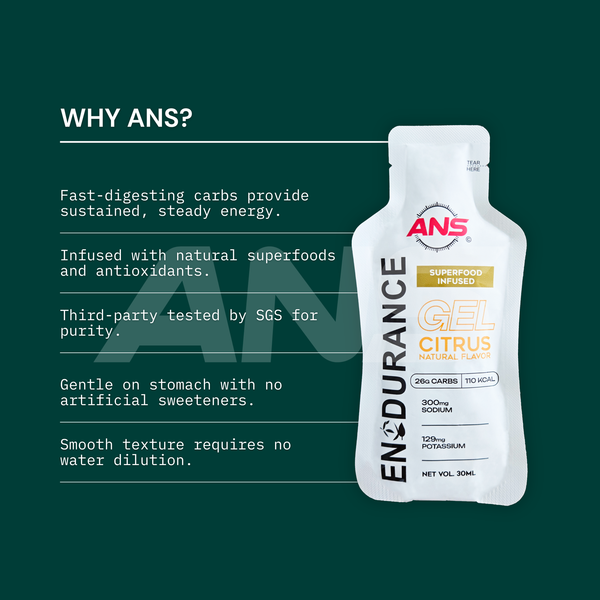
Each ANS Superfood Energy Gel carries 26g of carbohydrate. At the bottom of the range that is a gel about every 50 minutes, and at the top it is a gel about every 25 minutes. If you run easy and slow, aim lower: Jeukendrup notes the recommendations may need to come down when exercise intensity is low.
For a plan built around your own finish time, our race fuel calculator works out how many gels to take and how often.
Caffeine or Not
- Apple gel: gets its caffeine from guarana.
- Sour Citrus gel: the Citrus Superfood Energy Gel is caffeine-free and adds 300mg of sodium.
If you have never had caffeine on a run, try it on a long run first, not on race morning. The Apple and Citrus variety bundle gives you 10 of each to test.
Water With Your Gels
ANS describes its Apple gel as easy to consume without water, so you do not need to time every gel to a drink station. If you prefer a sip with it, that is fine too.
Drinking: Let Thirst Lead
In Singapore's heat, it is tempting to drink at every station "just in case". A study of 1,934 runners at three Singapore races in 2009, including the 21km at the Standard Chartered Marathon, found that 3% of half marathoners finished heavier than they started, a sign of drinking too much. The authors point to current advice that fluid intake be based on the sensation of thirst, because that reduces the risk of both dehydration and overhydration.
If you want to know your own numbers, our guide to calculating your sweat rate shows you how, and dehydration vs hyponatremia explains why drinking too much matters as much as drinking too little.
Practise It Before You Race It
Jeukendrup's review of gut training puts it plainly: it is important to practise a race nutrition strategy in training. Use your last two or three long runs as rehearsals. Eat the same breakfast at a similar time before you head out, take your gels on the same schedule, and note how your stomach feels.
Race Your First Half with ATHLO+
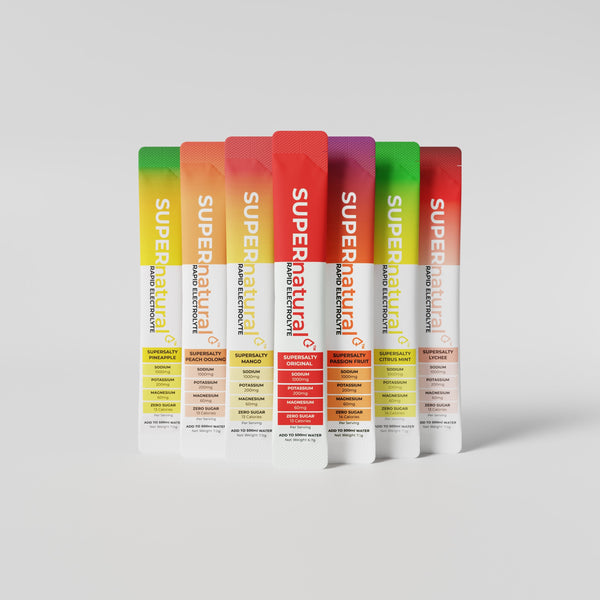
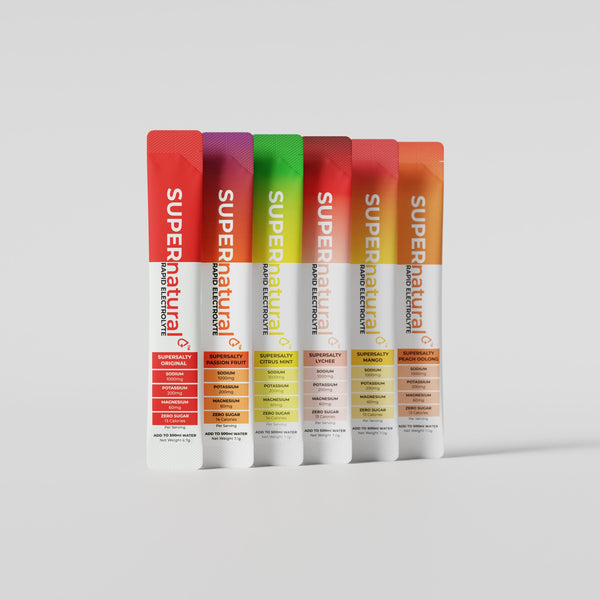
You can put your whole race-day fuel kit together on ATHLO+: ANS gels by the box or as the variety bundle, and SUPERnatural+ SUPERSALTY electrolytes, with 1000mg of sodium a sachet, for long training runs in the heat. Browse every gel and its carbs per serving in the Nutrition collection.
Ready to set your carb target? Read how many carbs you actually need per hour of exercise next.
Sources
- Kerksick CM et al. International Society of Sports Nutrition position stand: nutrient timing. Journal of the International Society of Sports Nutrition, 2017.
- Jeukendrup A. A Step Towards Personalized Sports Nutrition: Carbohydrate Intake During Exercise. Sports Medicine, 2014.
- Jeukendrup A. Training the Gut for Athletes. Sports Medicine, 2017.
- Tan DW et al. Body Mass Changes Across a Variety of Running Race Distances in the Tropics. Sports Medicine - Open, 2016.
- Race details from the BYD Singapore International Marathon adidas Half Marathon and race day transport pages, checked 27 October 2026. Product details from the ANS and SUPERnatural+ pages on ATHLO+, 2 November 2026.
Shop this story


More from Learn
 ANS Nutrition
How to Fuel a Long Run: The Complete Runner’s Guide to Energy Gels and CarbsHow many carbs per hour to take on a long run, when to take your gels and how...Read →
 Running
SGIM Race Week, Day by Day: From Easy Runs to Race MorningA day-by-day plan for SGIM 2026 race week, from Monday 30 November to race morning: easy runs, carb...Read →
 Recovery
11.11 Sale Singapore 2026: Therabody, Running and Recovery DealsWhen the ATHLO+ 11.11 sale starts, what is on sale, the bundles and how members get in early....Read →