

Gels vs Chews vs Drink Mix: Which Endurance Fuel Suits You?
Shop the gear in this storyThe Short Version
- Gels, chews, drinks and low-fibre bars can all hit your carb target. The research says to pick by personal preference and mix and match.
- What changes between them is how easy they are to carry, count and take at your race pace, and how much water they need.
- Up to about 60g an hour, any single type of carbohydrate will do. Above that, you need a blend such as glucose with fructose.
Stand at the fuel shelf of any running shop before a big race and you will see the choice: rows of gel sachets, bags of chews that look like sweets, and tubs of powder for your bottle. Your running club group chat will have a strong opinion on each one.
The good news is that the science is more relaxed than the group chat. Here is your complete guide to choosing between gels, chews and drink mixes: what each one does well, what to watch for, and how to combine them, with the numbers from sports nutrition research.
Gels, Chews and Drink Mixes at a Glance
| Gels | Chews | Carb drink mixes | |
|---|---|---|---|
| How you take it | Squeeze and swallow | Chew a piece at a time | Sip from a bottle or flask |
| Counting carbs | Easy: one sachet, one number | Count the pieces against the label | Depends on how much you mix and drink |
| Carrying it | Small and flat; fits a pocket | A bag or packet in a pocket | You carry the water too |
| Watch out for | Taste fatigue on long days | Chewing when you are breathing hard | Mixing it too strong |
Carbs per serving vary a lot between brands, so read the label. Our Nutrition collection lists carbs per serving for every gel we stock.
What the Research Actually Says
Sports scientist Asker Jeukendrup's 2014 review in Sports Medicine is clear on format. Your carbohydrate target can be met with drinks, gels, or low-fat, low-protein and low-fibre solid foods such as bars, and the choice should come down to personal preference. Athletes can mix and match to reach their goal.
How Much: The Target Matters More Than the Format
The same review sets targets by how long you are out. Around an hour, small amounts or even a carbohydrate mouth rinse can help. For two to three hours, work up to about 60g an hour. Ultra-endurance efforts call for about 90g an hour.
The 60g Line
A single type of carbohydrate can be used at up to about 60g an hour. To go higher, the carbs need to be a blend, such as glucose with fructose, so they do not build up in your gut. The review notes these high rates were reached with a drink, but also with a gel or a low-fibre energy bar. So the 60g line is about the type of carbohydrate in the product, not whether it is a gel, a chew or a drink.
Pick the format you will actually use at race pace, then make the numbers add up.
Energy Gels
- Good for: race pace. There is nothing to chew, and one sachet is one easy number to count.
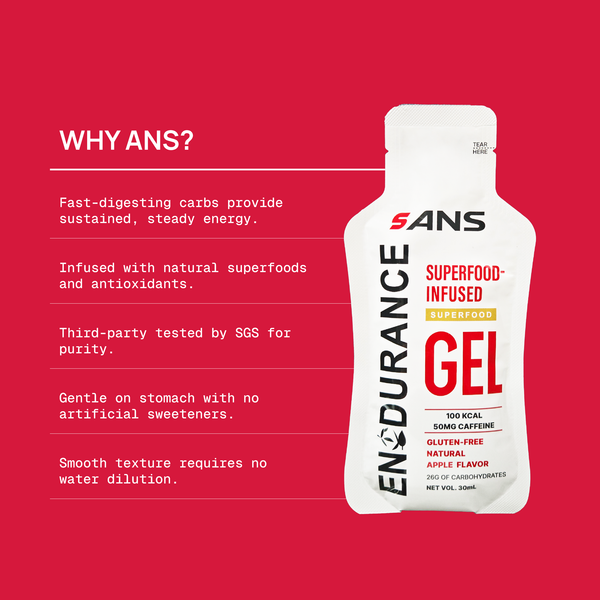
- Watch for: taste fatigue on long days, and gels that are hard to get down without water. Some are made to be taken on their own: ANS describes its Apple gel as easy to consume without water.
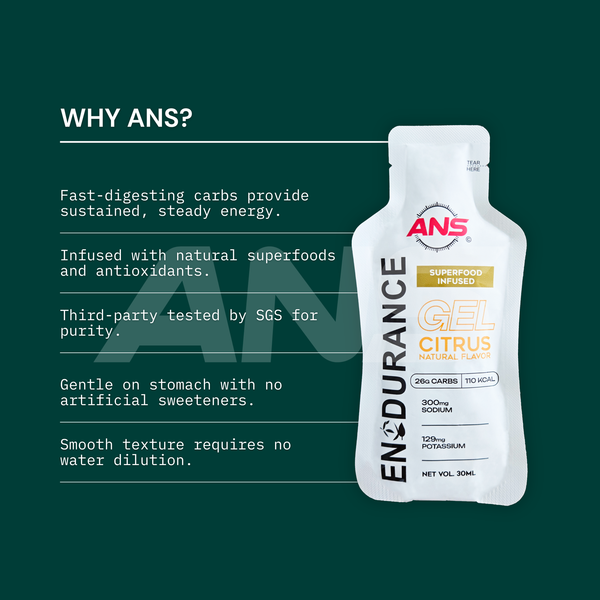
- Know your gel: each ANS Superfood Energy Gel has 26g of carbohydrate. The Apple gel gets its caffeine from guarana. The Sour Citrus gel is caffeine-free and adds 300mg of sodium.
Energy Chews
- Good for: easy long runs and rides, where you can chew without losing your breathing rhythm, and runners who do not like the texture of gels.
- Watch for: chewing when you are breathing hard at race pace, and losing count of how many pieces you have had.
- Count properly: chews come in smaller pieces, so work out how many pieces make up your hourly target before you head out.
Carb Drink Mixes
- Good for: long sessions where you are drinking anyway, because fuel and fluid go in together.
- Watch for: mixing it too strong. Jeukendrup's review notes that solid foods and highly concentrated carbohydrate solutions have been shown to reduce fluid absorption, and his 2017 review of gut training links highly concentrated carbohydrate solutions with more stomach problems.
- The catch: your carbs are tied to how much you drink. If it is hot and you want more water, you take in more sugar too, unless you carry plain water as well.
Mixing and Matching
Most runners end up with a mix, and that is exactly what the research suggests. A simple setup for a long run in Singapore's heat:
- Fluid and salt: a 500ml SUPERflask with one sachet of SUPERnatural+ SUPERSALTY, an electrolyte mix with 1000mg of sodium, 200mg of potassium and 60mg of magnesium. It covers the salt, not the carbs.
- Carbs: gels on a schedule that fits your target. At 60g an hour, 26g gels work out to one about every 25 minutes.
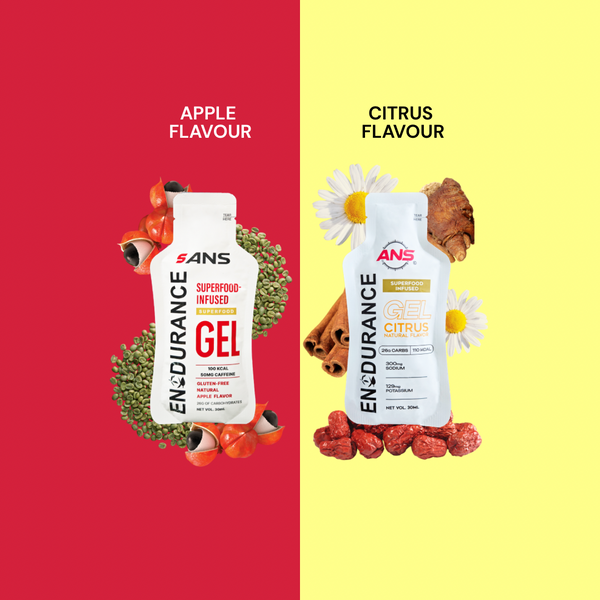
- Variety: alternate the caffeinated Apple gel with the caffeine-free Citrus, or add chews on the easier sections.
Whatever you choose, Jeukendrup's advice is to practise your competition nutrition plan in training, to reduce the chance of stomach problems and to train your gut to absorb more.
Find Your Fuel with ATHLO+
ATHLO+ stocks ANS gels on their own or as the Apple and Citrus variety bundle, which gives you 10 of each to test, plus SUPERSALTY and the SUPERflask. We do not sell chews or carb drink mixes, so if you use them, the label and the numbers above are your guide.
Ready to work out your own hourly target? Read how many carbs you actually need per hour of exercise next, or plug your race into our race fuel calculator.
Sources
- Jeukendrup A. A Step Towards Personalized Sports Nutrition: Carbohydrate Intake During Exercise. Sports Medicine, 2014.
- Jeukendrup A. Training the Gut for Athletes. Sports Medicine, 2017.
- Product details from the ANS and SUPERnatural+ pages on ATHLO+, 2 November 2026.


More from Learn
 ANS Nutrition
Your First Half Marathon: The Complete Race-Day Fuelling and Nutrition PlanWhat to eat the night before, when to have breakfast before a 4:30am flag-off, how many gels to...Read →
 ANS Nutrition
How to Fuel a Long Run: The Complete Runner’s Guide to Energy Gels and CarbsHow many carbs per hour to take on a long run, when to take your gels and how...Read →
 Pilates
 vs Yoga: What Each Does for You, and Which to Try FirstPilates and yoga compared: where each comes from, mat vs reformer and the main yoga styles, what the...Read →